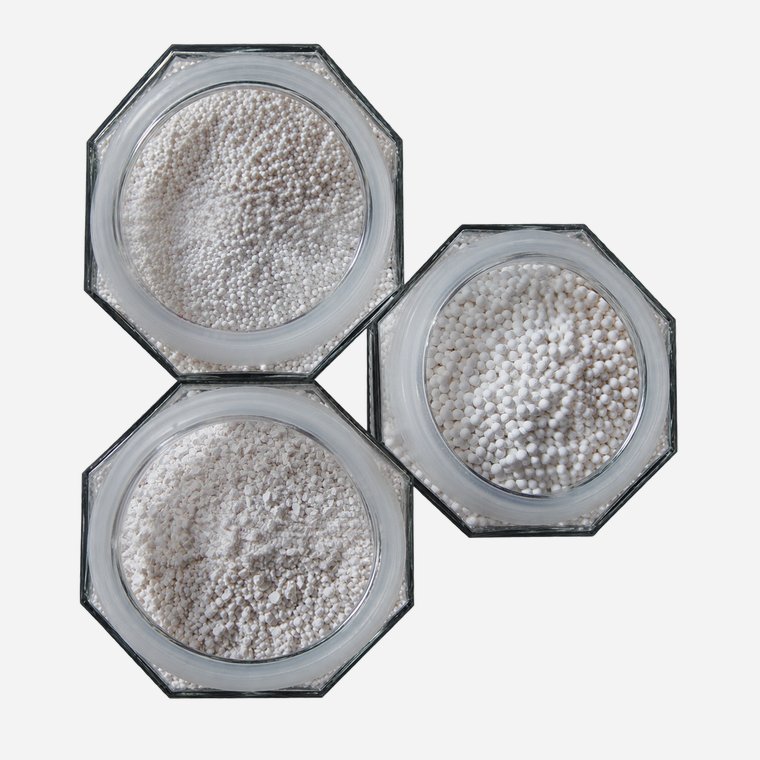
Industrial activated alumina for gas drying and adsorption systems
Activated alumina adsorbent is a porous material that removes water vapour from compressed air and process gases, which makes it a common gas drying adsorbent. Drying grades can be regenerated by heating or by pressure swing, depending on the system.
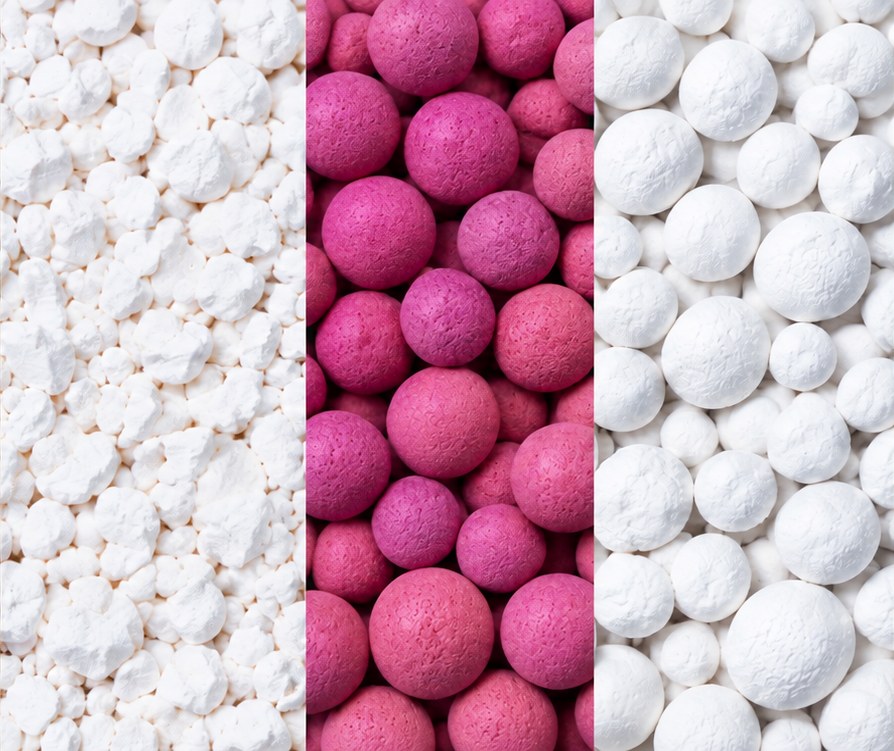
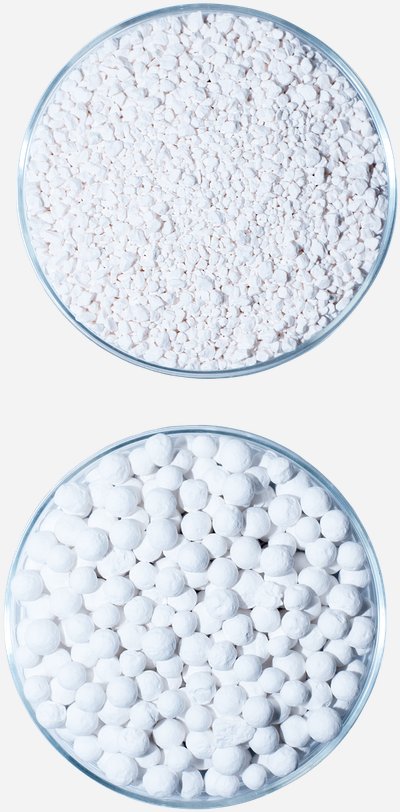
We help you select the grade and particle size for your process. Selection depends on adsorption capacity, mechanical strength, regeneration method, operating conditions and acceptable pressure drop. See the Grades and originals tab for the available sizes and brands.
Activated alumina for compressed air dryers
Activated alumina is the standard air dryer desiccant in heatless (cold-regenerated) adsorption dryers. These dryers regenerate the bed with part of the dried air, expanded to atmospheric pressure, without heating. Activated alumina is also used in heat-regenerated dryers, where a typical regeneration temperature is about 170-200 °C, according to adsorbent manufacturer data. In thermal swing adsorption (TSA) units for process gas drying, activated alumina is typically regenerated at 200-300 °C; the higher temperature is used when a drier product gas is required. The required conditions depend on the grade and the system design.
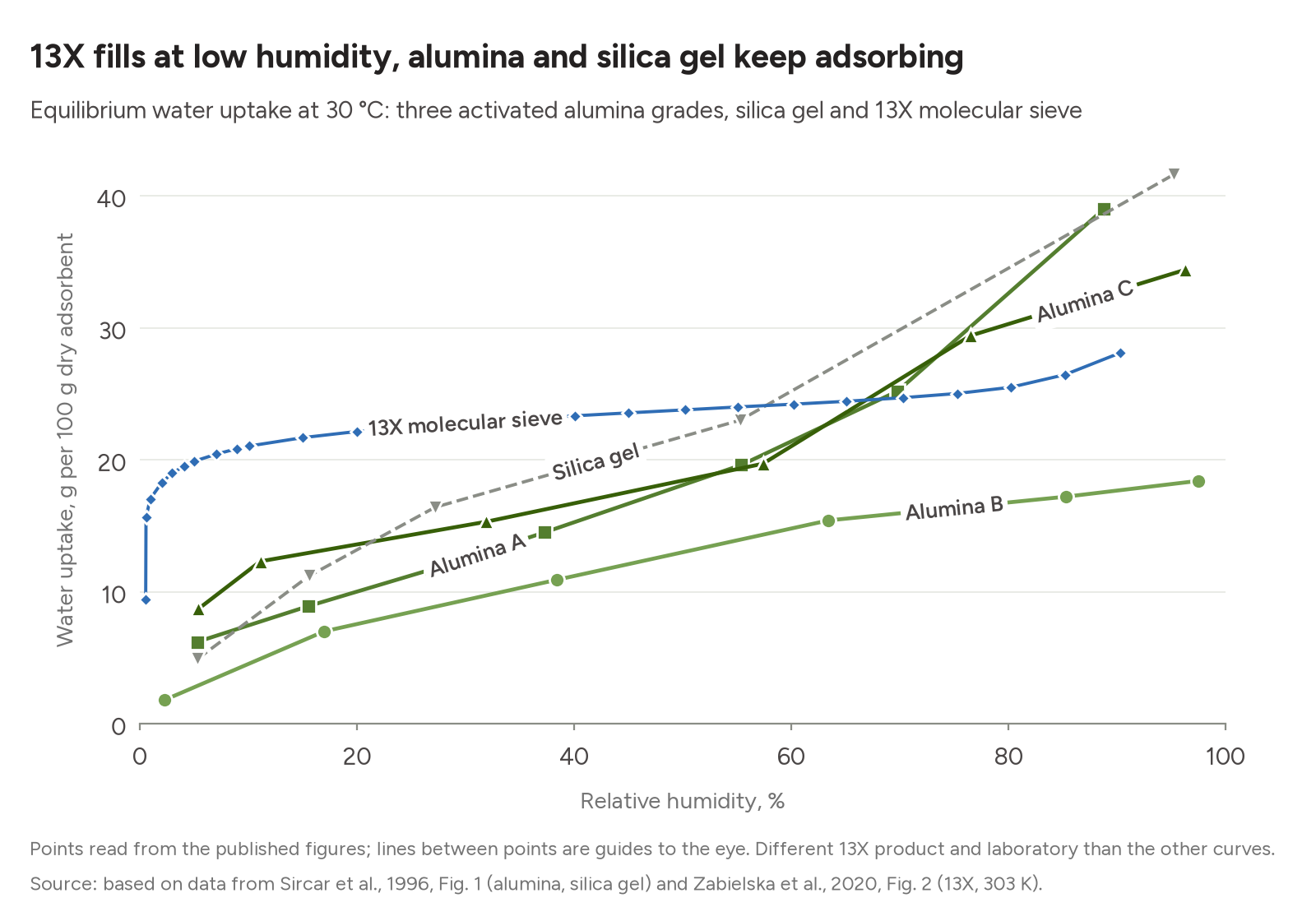
Activated alumina is used for pressure dew point targets of -25 to -40 °C in heatless and standard externally heat-regenerated dryers. The achievable value depends on the dryer design and operating conditions. Under ISO 8573-1, water class 3 requires a pressure dew point of -20 °C or lower, class 2 requires -40 °C or lower, and class 1 requires -70 °C or lower. For -70 °C, dryer and adsorbent manufacturers use 4A molecular sieve.
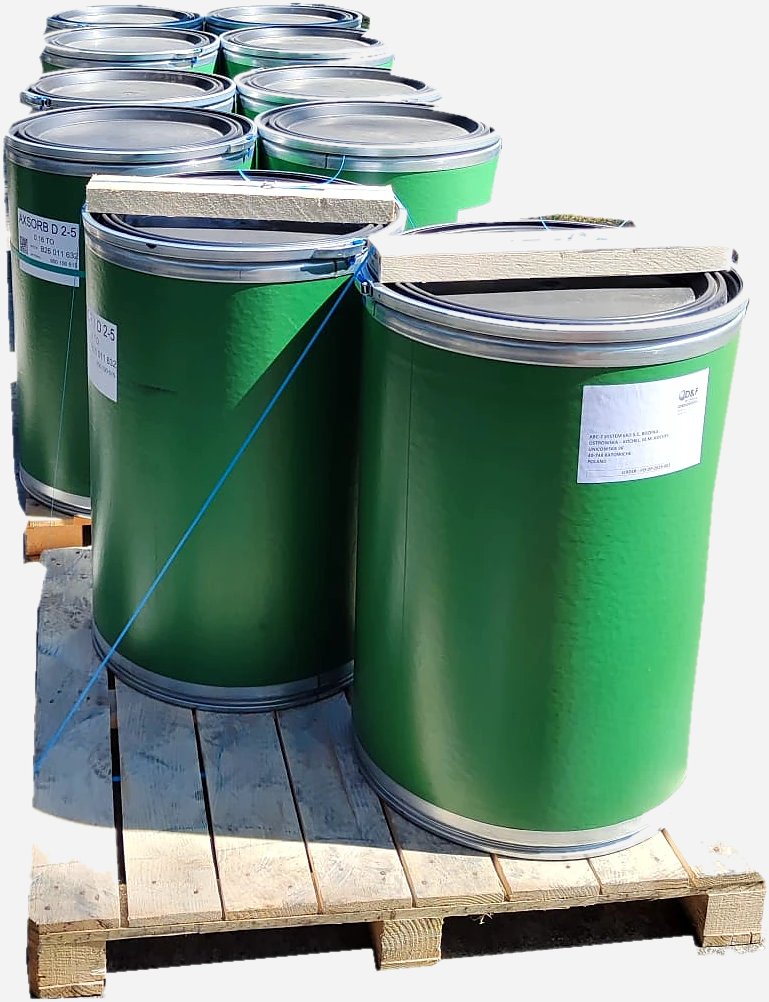
For a replacement bed, send the dryer manufacturer and model, the fill mass or vessel dimensions, the bead size, the dew point target and the regeneration method. Our article Desiccants for compressed air dryers compares silica gel, activated alumina and molecular sieve.
Activated alumina for gas drying
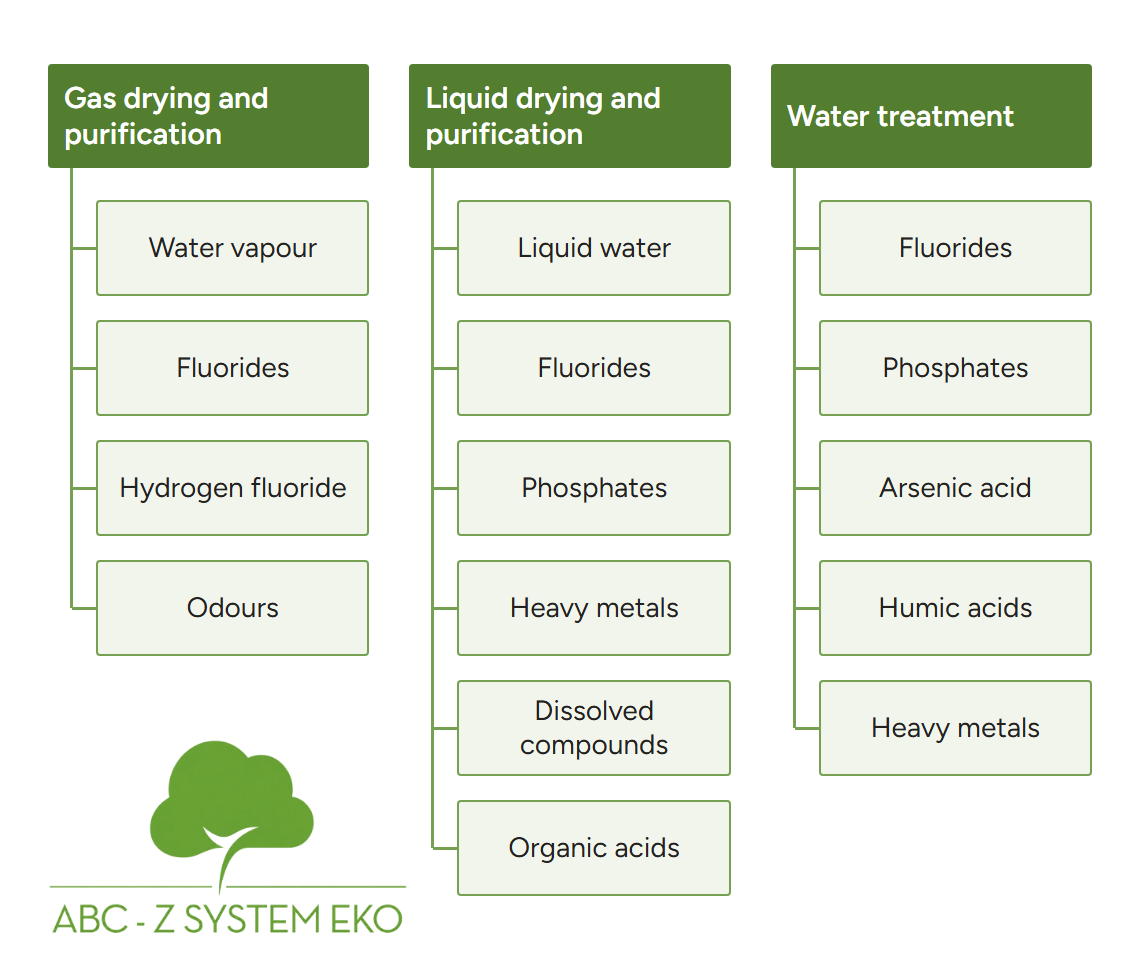
Activated alumina removes water vapour from air, nitrogen, oxygen, hydrogen and other technical gases before further processing, storage or use. To select a grade, we need the gas composition, inlet moisture, flow rate, operating pressure, contaminants and regeneration conditions.
Regeneration in PSA and TSA systems
In temperature swing adsorption (TSA), the drying bed is regenerated by heating and a gas flow that removes the released moisture. In pressure swing adsorption (PSA), pressure reduction and purge gas allow the moisture to desorb. The cycle must match the grade and the equipment design.
For bead sizes, granules and brands, see the Grades and originals tab. Claus catalysts and grades impregnated with potassium permanganate are also available; see the Application tab for details.
How activated alumina holds water
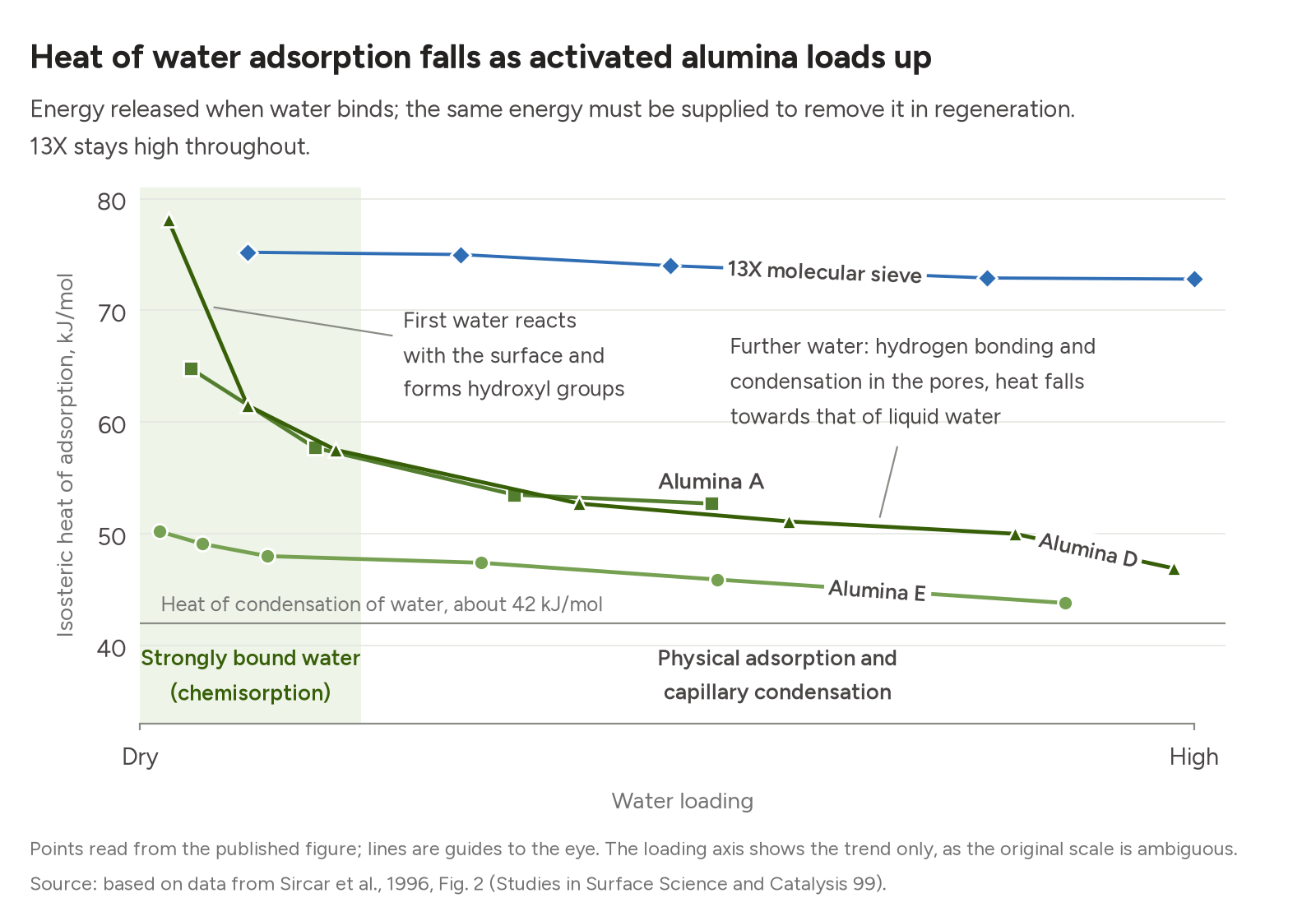
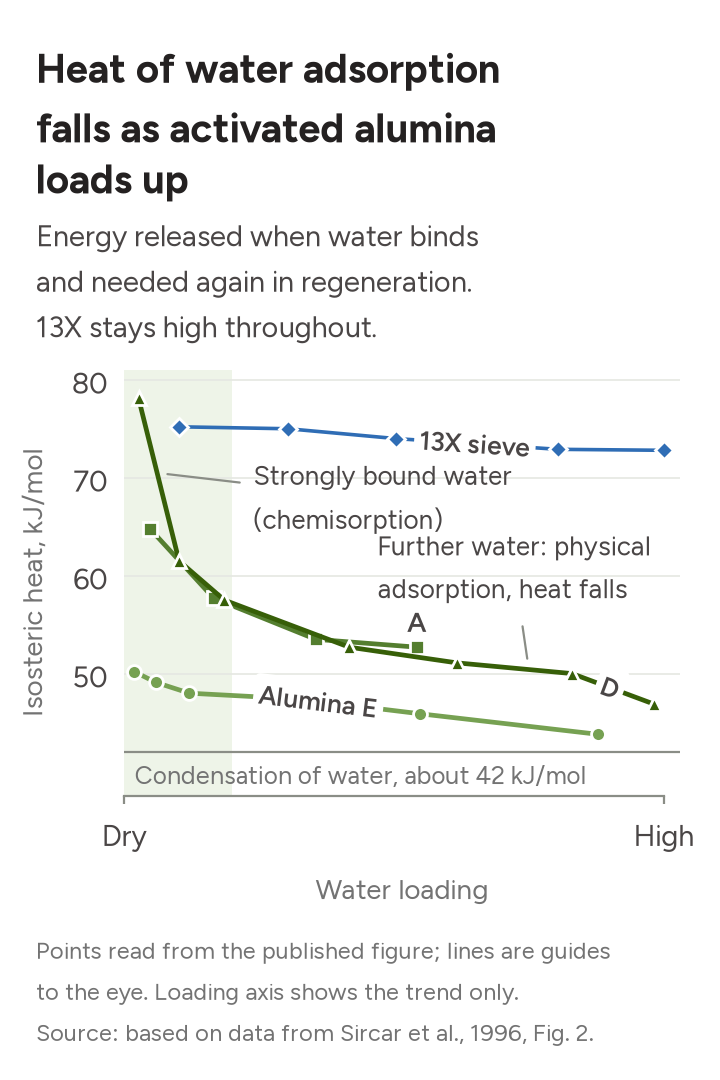
Activated alumina binds water in two ways. On a dry bed, the first water molecules react with the alumina surface and form hydroxyl groups; this water is held strongly, with a heat of adsorption well above the heat of condensation of water. As the loading grows, further water is held by hydrogen bonds and condenses in the pores, and the heat of adsorption falls towards that of liquid water. Over most of its capacity, activated alumina therefore needs less energy for regeneration than 13X molecular sieve, which binds water strongly up to full loading.