Desiccant bags ES: an alternative to silica gel packets
In a 40-day test at 25 °C and 90% RH, ES Basic Dry absorbs up to 100% of its initial weight in water, versus about 35% for narrow-pore silica gel. With this higher capacity, you can often use fewer or smaller sachets to protect the same pack.
2-5 days
Most orders are dispatched within 2-5 working days
EU
Made in the EU
PZH
Hygiene certificate for food contact
Compare ES Basic Dry with silica gel packets
Silica gel desiccant packets, also known as silica gel sachets or silica gel bags, are among the most common moisture absorbers used to protect packed products. In most packaging applications, however, they are not the most efficient choice: at the same weight they take up much less water than ES Basic Dry, so more or larger packets are needed.
In most packaging applications, ES Basic Dry sachets can directly replace silica gel sachets. ES Basic Dry has a higher water uptake capacity than narrow-pore silica gel: in a 40-day test at 25 °C and 90% RH it absorbs up to 100% of its initial weight in water, compared with about 35% for the gel under the same conditions. These values do not describe performance at every humidity or over every storage period, so we select the desiccant type, fill weight and number of sachets for the specific package and conditions.
When to choose ES bags instead of silica gel?
Choose ES Basic Dry when the goods must stay dry for a long time, travel by sea or through changing temperatures, or are packed in large cartons. In these conditions a silica gel sachet of the same weight reaches its capacity sooner. ES Basic Dry takes up more water per gram, holds it inside the sachet and does not swell or leak when saturated. For container cargo, we select ES K, ES Clay or ES Gel based on the route and transit time.
Clay vs silica gel: which desiccant to choose?
Choose the desiccant using the required humidity level, package volume, moisture barrier, initial moisture in the goods and packaging, and storage or transport time. Tell us these conditions so we can propose the material, fill weight and number of sachets.
Looking for food-safe desiccant packets? ES Basic Dry sachets are intended for dry and dehydrated food and food supplements requiring aw ≤ 0.65, stored long term at room temperature in hermetically closed packaging. They hold PZH hygiene certificate No F.FB.60412.218.2025 and are covered by our declaration of conformity for food contact. See the full conditions in the Standards, documentation and approvals tab.

Calcium chloride desiccants for packaging and containers
ES Basic Dry, ES K and ES Clay combine two desiccants: natural clay, which adsorbs water vapour already at low humidity, and calcium chloride, which absorbs water and adds high capacity at higher humidity. In ES Basic Dry the clay is calcined. ES Gel combines calcium chloride with modified starch, which binds the absorbed water into a gel. ES products protect products, parcels, cartons, individual packs, bulk packaging and container cargo from moisture during storage, handling and transport. Unlike synthetic silica gel, ES Basic Dry, ES K and ES Clay are based on natural clay.
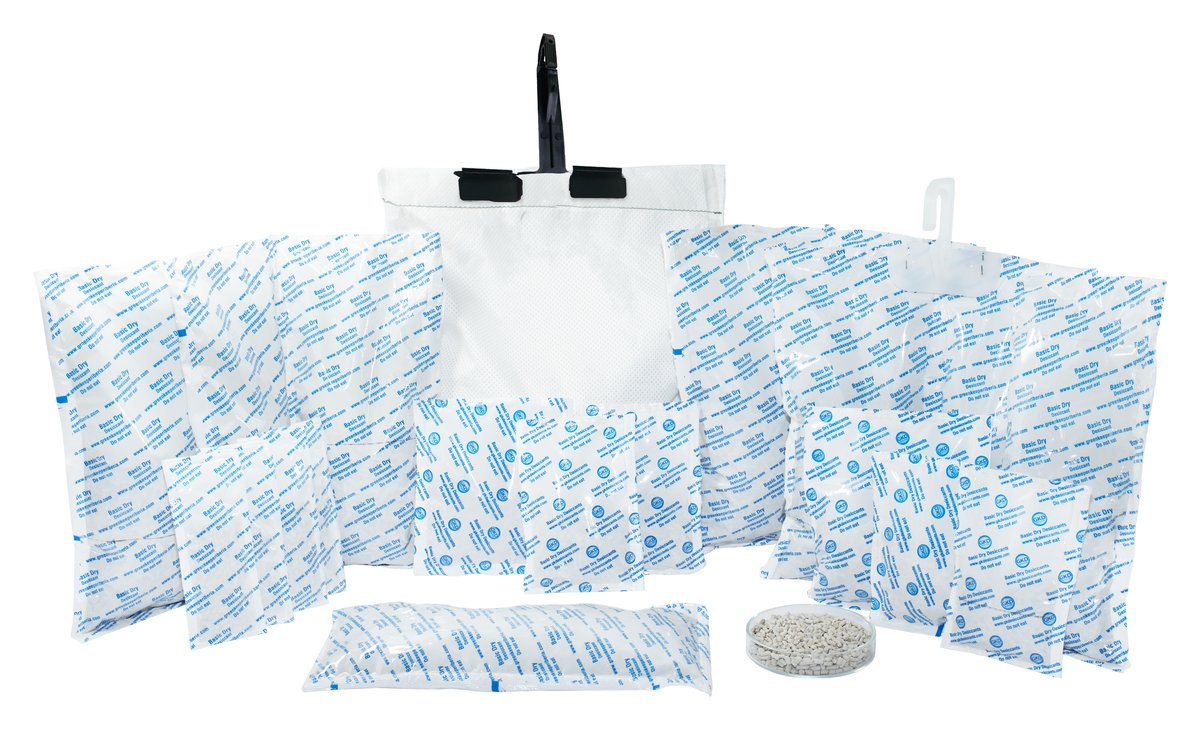
ES product range
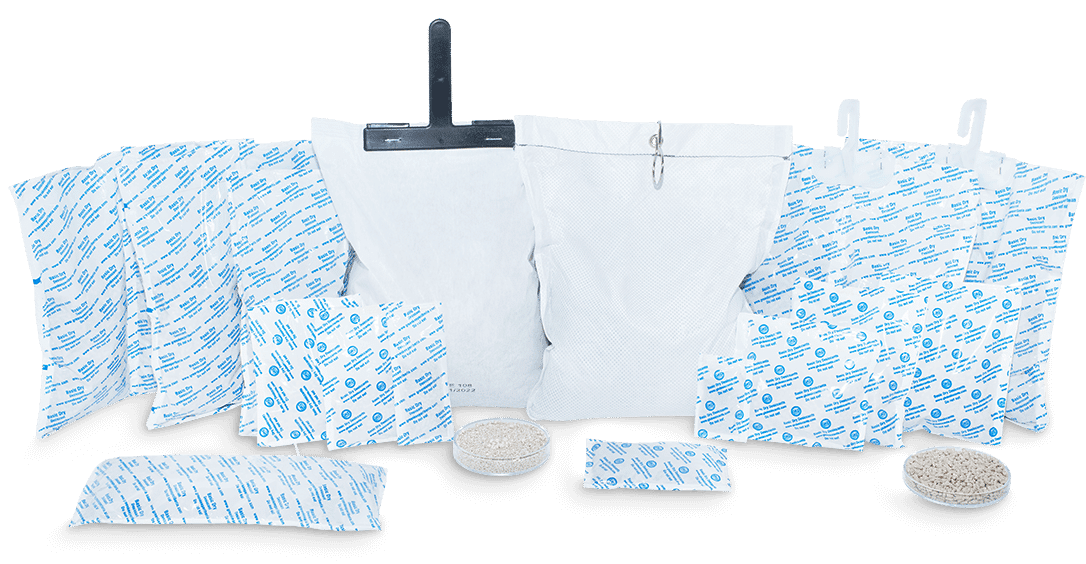
The ES range includes variants for packaging, storage and transport. ES Basic Dry bags are used in parcels, cartons and bulk packaging, while ES K, ES Clay and ES Gel are intended for larger cargo spaces. ES Basic Dry sachets come in nine fill weights from 1 g to 500 g. ES K and ES Clay are 1000 g container bags with hooks, for trips of up to 60 days and up to 30 days respectively. ES Gel is a 750 g container strip of six 125 g sachets.

ES Basic Dry

Container ES K

Container ES Clay
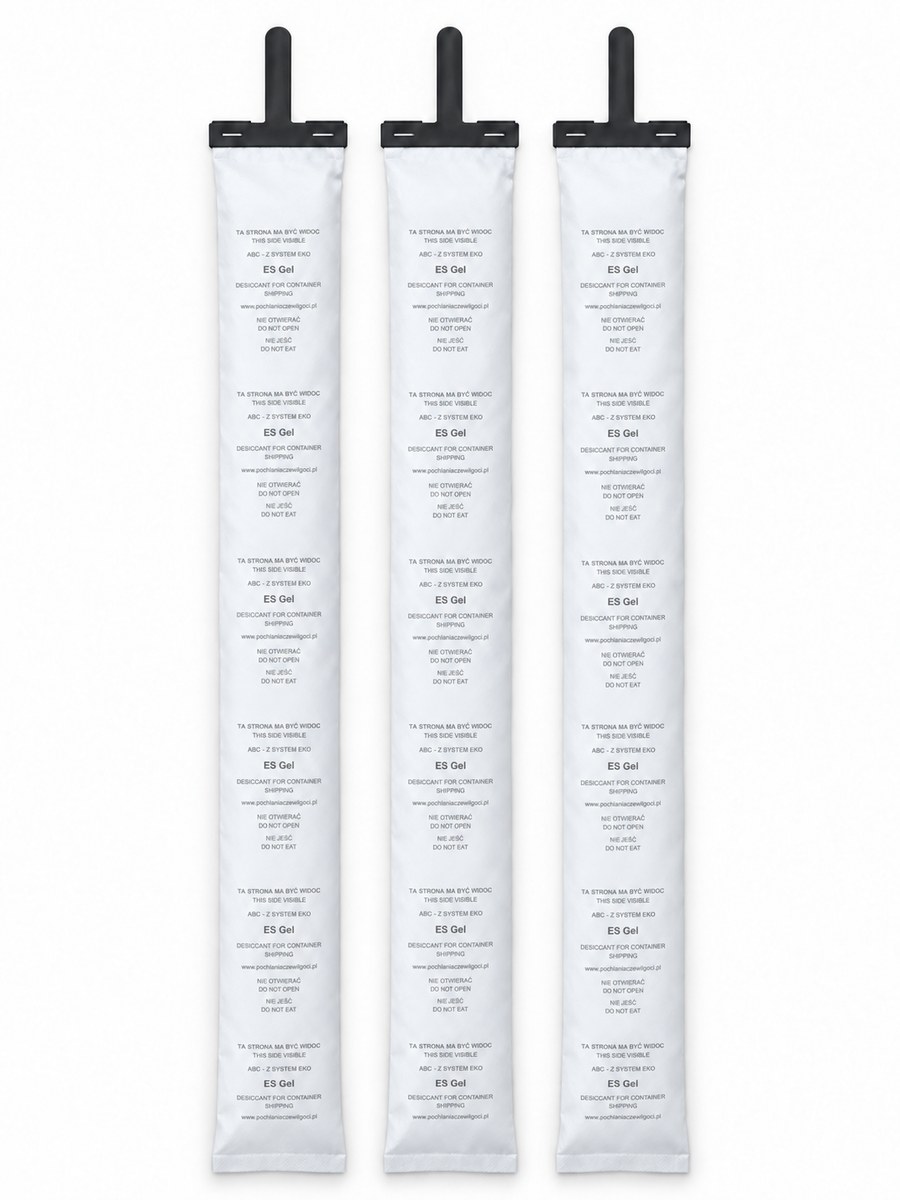
Container ES Gel
Additional product protection during storage and transport
Packaging desiccants are placed inside packages to reduce the risk of moisture exposure during storage and transport. They are a practical solution for companies packing goods in parcels, cartons, pouches, bulk packaging and other packaging for moisture-sensitive goods.
-
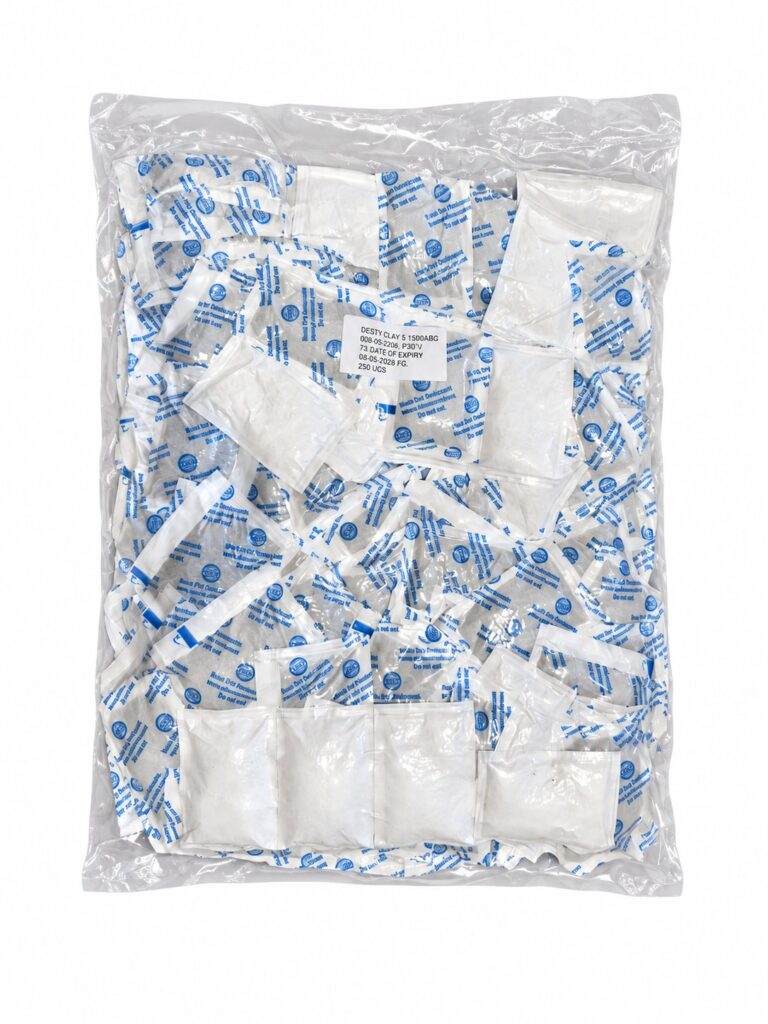
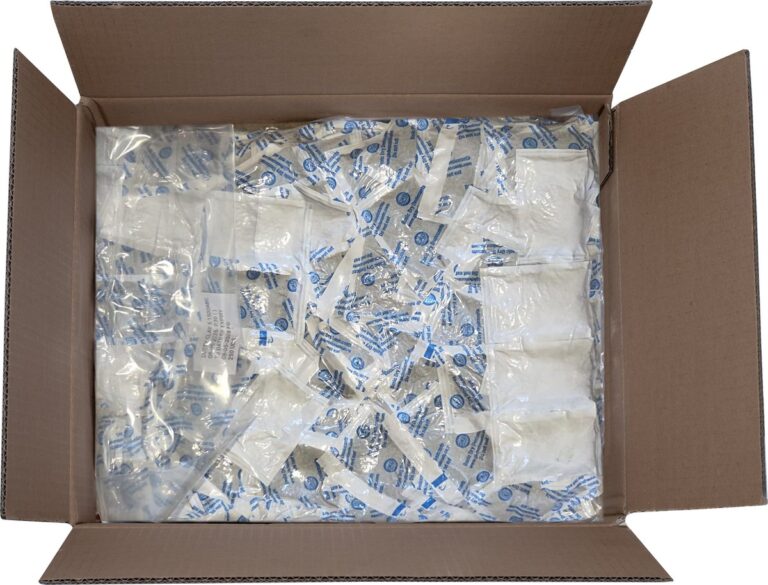
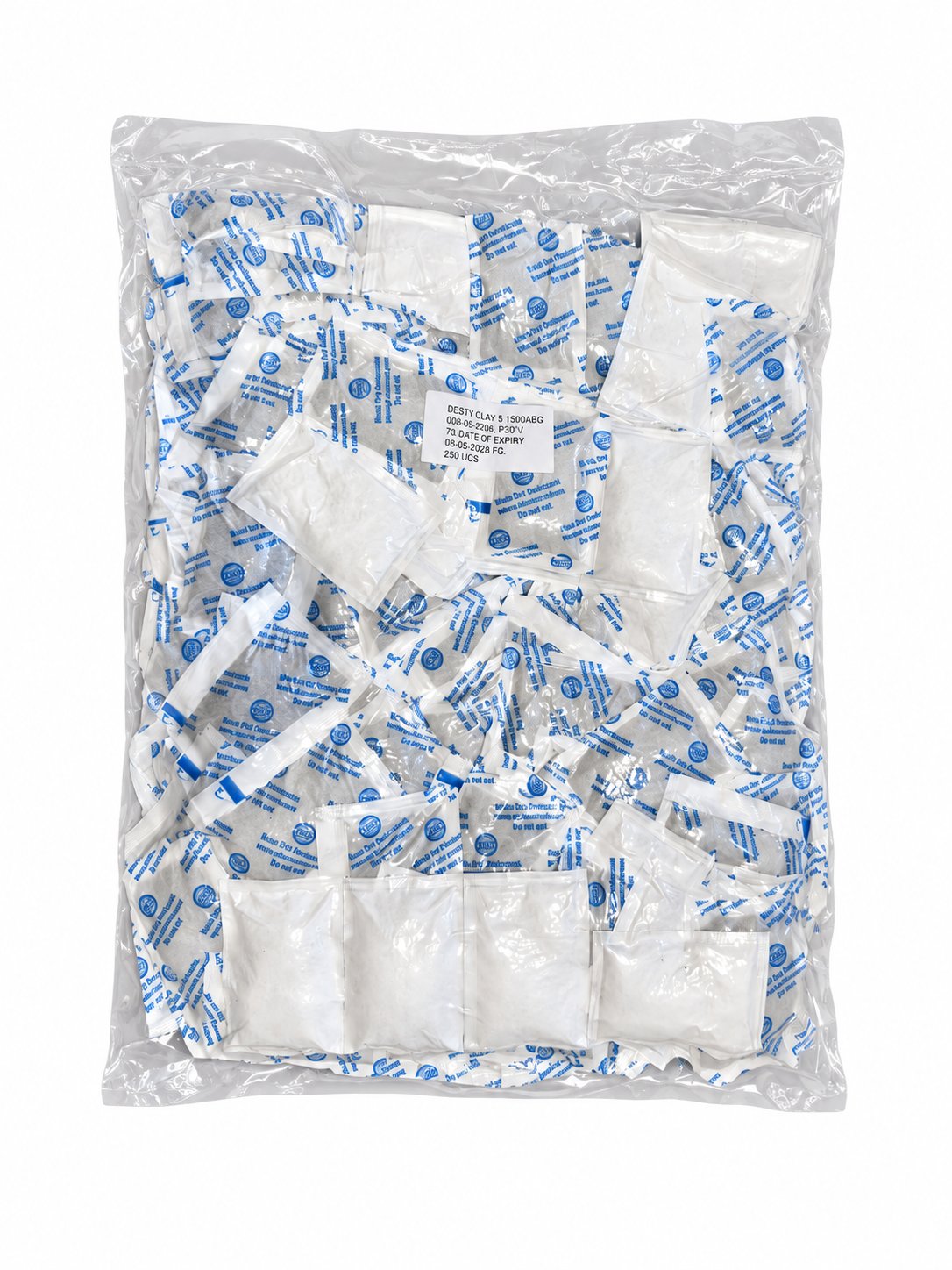
ES Basic Dry sachets packed in a clear plastic film bag Part of active packaging
ES products are used as part of active packaging systems where moisture control is required inside the package or cargo space. Depending on the variant, they can be applied in individual packs, cartons, bulk packaging and selected transport applications.
Clay-based desiccant with calcium chloride
ES Basic Dry sachets are filled with calcined natural clay impregnated with calcium chloride. The clay adsorbs water vapour already at low humidity and the calcium chloride absorbs water at higher humidity, so together they give a high moisture uptake over a wide humidity range. The water stays inside the sachet, which does not swell or leak when saturated. This matters most for longer storage, sea transport and larger packages.
In most packaging and transport applications, ES Basic Dry sachets can directly replace classic silica gel packets and take up more water at the same weight.
Packaging and transport variants
The ES range includes packaging variants as well as larger transport versions, such as ES K, ES Clay and ES Gel. Transport variants are designed to help reduce the risk of moisture accumulation and condensation in larger load spaces during sea, road and intermodal transport.
Selection criteria
The right variant depends on the product type, package size or cargo space, barrier properties, initial moisture level and planned storage or transport time.
-

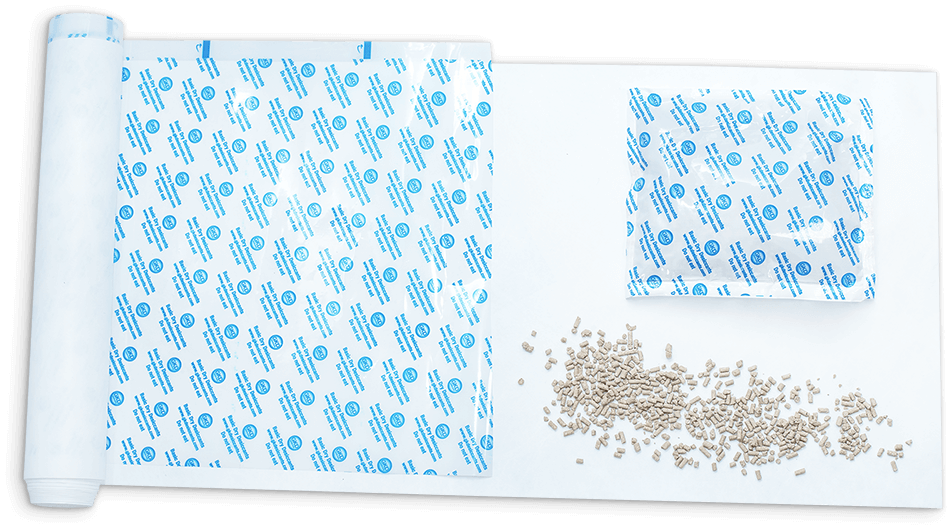
Desiccant sachet made of HDPE nonwoven and PET/PE laminate, with calcined natural clay filling Bag construction
The desiccant is packed in bags adapted to the product variant and fill weight. ES Basic Dry bags, from 1 g to 500 g, are heat-sealed from two materials: a breathable HDPE nonwoven (Tyvek type) on one side and a PET/PE laminate on the other. The breathable nonwoven allows water vapour to reach the fill. The ES Basic Dry envelope meets the dust-tightness requirements for type B desiccant bags under DIN 55473.
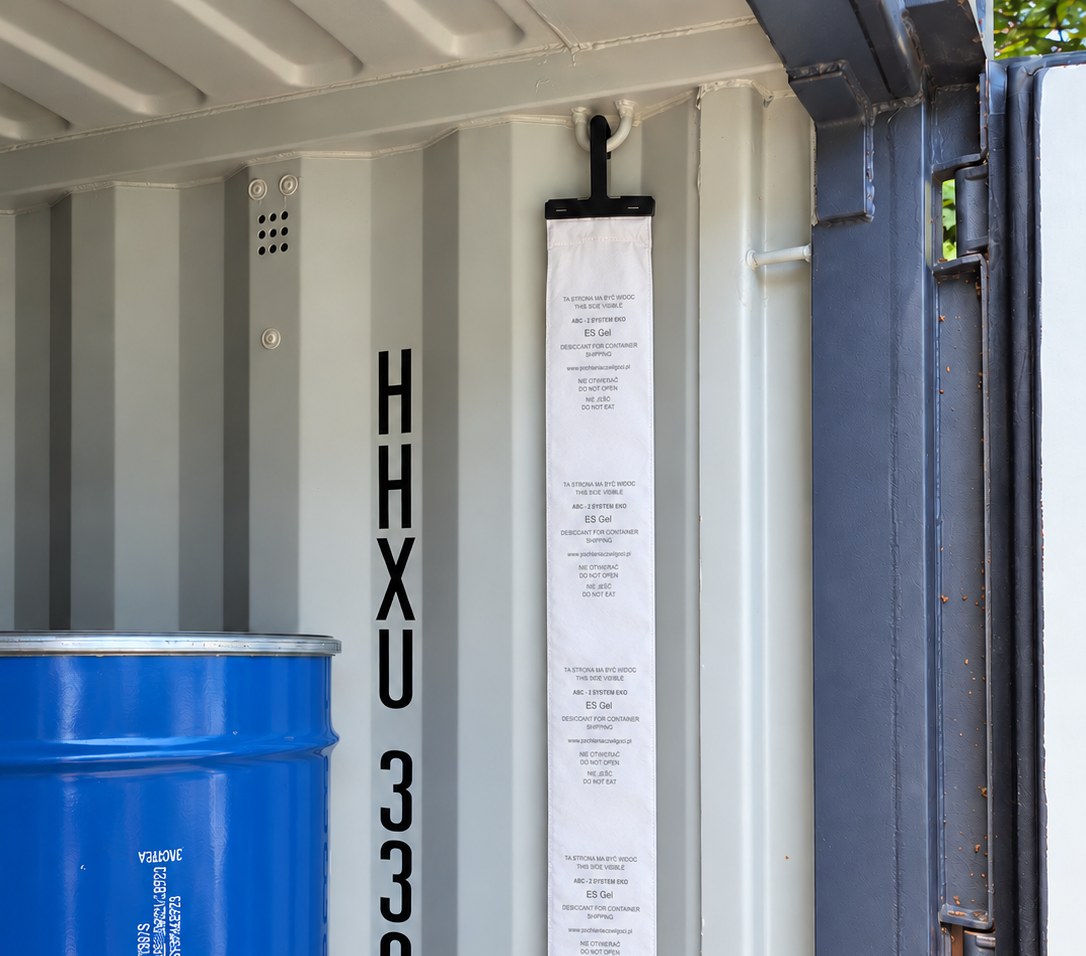
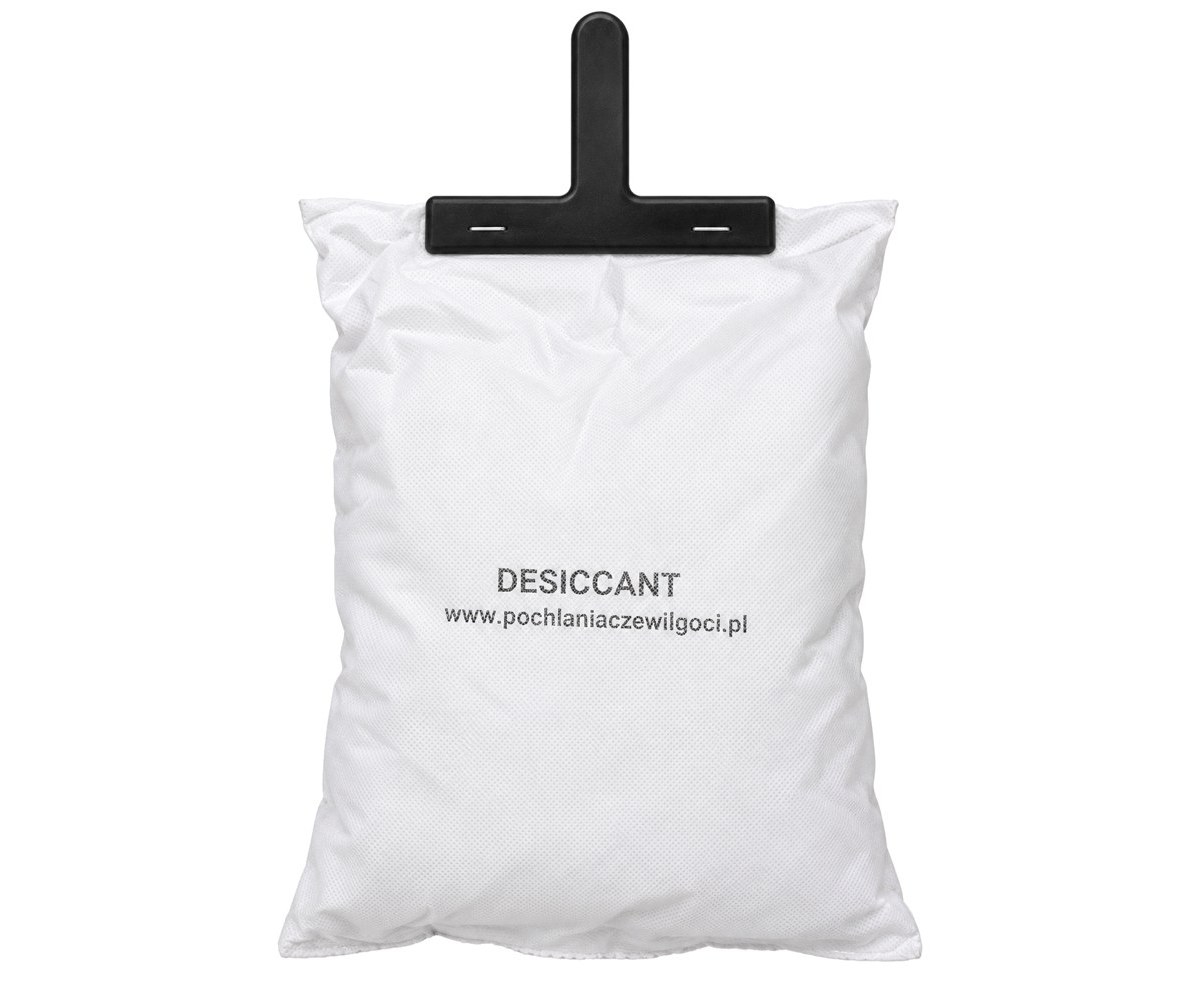
ES K and ES Clay are 1000 g bags made of nonwoven material with a plastic hook. They absorb up to 80% (ES K) and up to 60% (ES Clay) of their own weight at 25 °C and 95% RH. Their nonwoven bags meet the dust-tightness requirements for type A desiccant bags under DIN 55473. ES Gel is a strip of six sachets made of Tyvek® and PE/PP laminate, in a nonwoven sheath with a hook. The container variants are intended for larger fill weights and transport applications.
Plastic film bags
The desiccants are packed in plastic film bags that limit contact with moisture before use.
Transport cartons
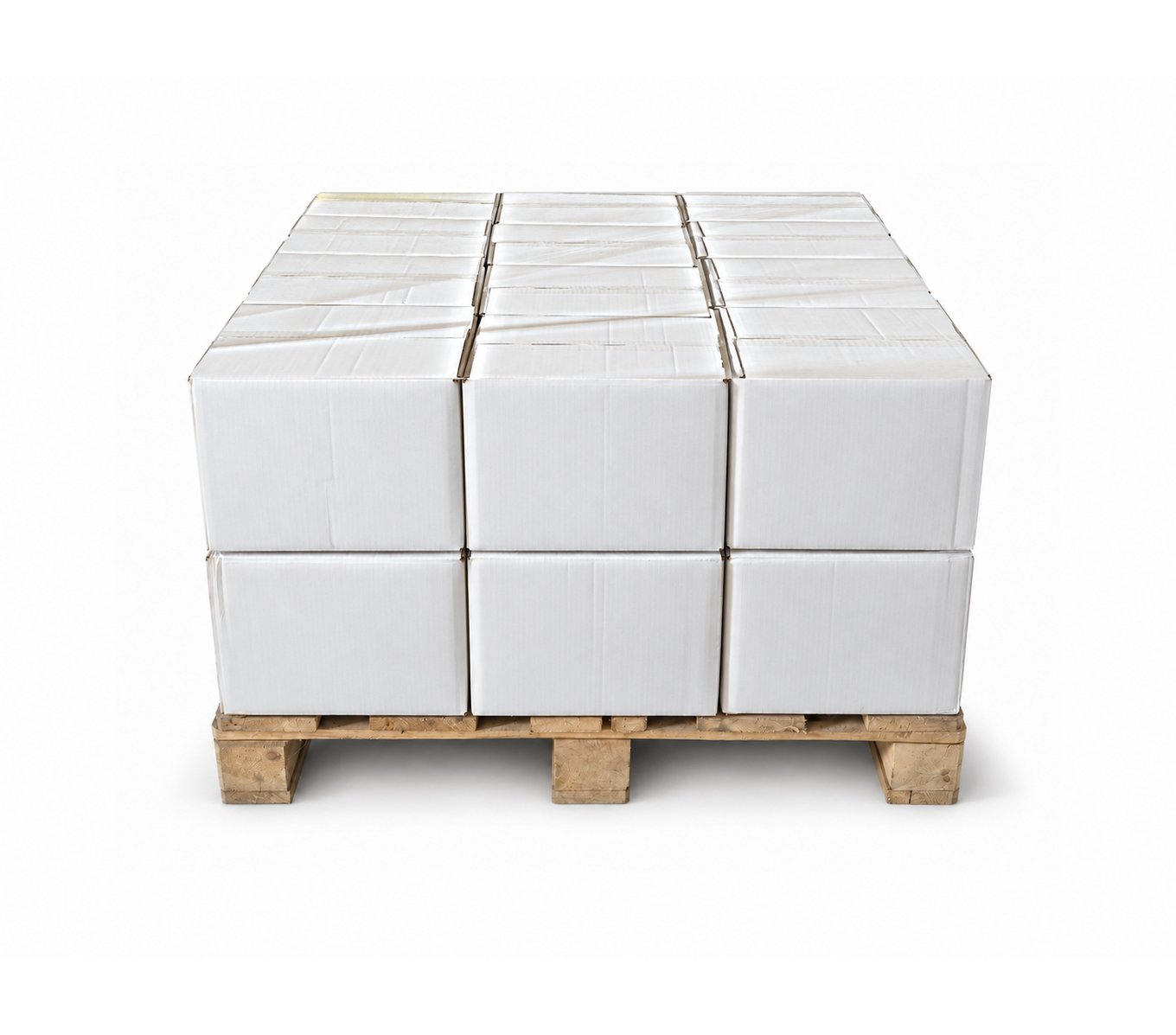
The plastic film bags are packed in transport cartons:
ES Basic Dry and ES K: 315 × 300 × 240 mm. ES Clay: 315 × 300 × 280 mm.
ES K: 12 bags per carton. ES Clay: 16 bags per carton. ES Gel: 12 strips per carton. The number of ES Basic Dry sachets per carton depends on the fill weight and is listed on the ES Basic Dry page.
Pallets and minimum order
Larger orders are shipped on pallets. Minimum order: one carton.
-
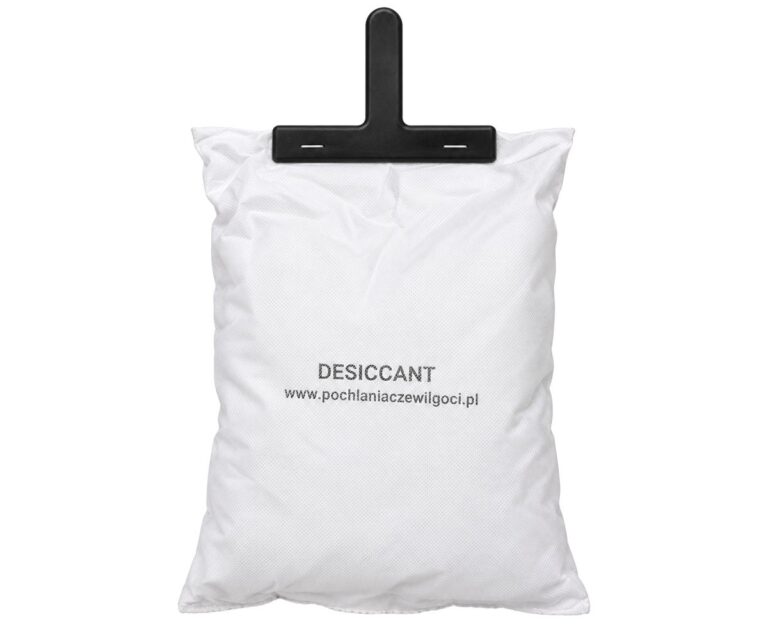
ES Clay 1000 g container desiccant bag with a black plastic hook Key properties of ES desiccant bags
- High moisture uptake, depending on the variant and conditions of use.
- Available in different fill weights for packaging, storage and transport applications.
- Desiccant based on calcium chloride: with clay in ES Basic Dry, ES K and ES Clay, with modified starch in ES Gel.
- Suitable for products requiring additional moisture protection inside packaging.
- ES Basic Dry sachets hold PZH hygiene certificate No F.FB.60412.218.2025. See the food contact conditions in the Standards, documentation and approvals tab.
- Bag materials selected for the application: HDPE nonwoven and PET/PE laminate (ES Basic Dry), nonwoven material (ES K and ES Clay), Tyvek® and PE/PP laminate in a nonwoven sheath (ES Gel).
- ES Basic Dry has a durable, dust-tight envelope. ES Gel strips have a protective nonwoven sheath.
-
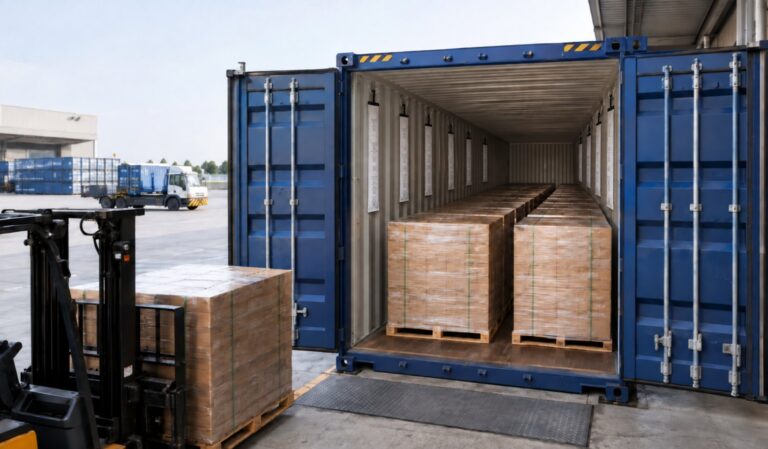
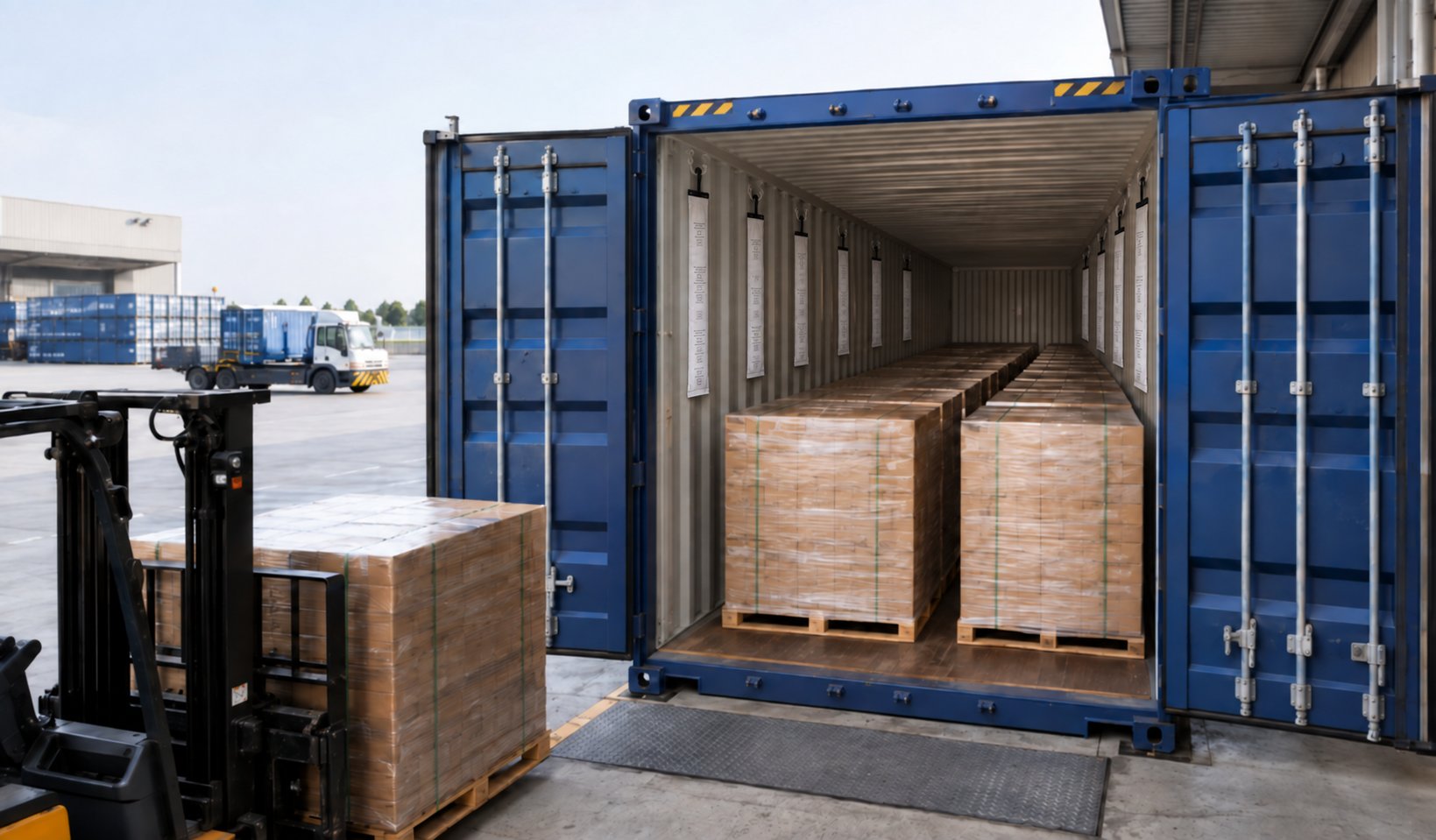
Illustration of a shipping container with palletised cargo and desiccant strips hanging on the side walls Where are ES desiccant bags used?
ES bags are used in individual packages, cartons, pouches, bulk packaging and transport crates. ES Basic Dry sachets are mainly intended for protecting packed products, while the container variants ES K, ES Clay and ES Gel are used in closed cargo spaces and transport applications.
Typical applications include:
- parcels, cartons and bulk packaging,
- export and storage packaging,
- mechanical parts and metal components,
- electronics and technical components,
- technical chemicals and moisture-sensitive products,
- dry food and food supplements packed with ES Basic Dry sachets, within the documented food contact conditions,
- metallurgical products and corrosion-sensitive parts,
- products requiring reduced risk of caking, moisture exposure or packaging quality loss.
Dietary supplements and food packaging. Small ES Basic Dry sachets, from 1 g to 10 g, are used in bottles and jars with capsules, tablets and powders, and in packs of dry food, to keep the contents dry and free-flowing.
-
Product documentation
Technical data sheets describe the composition, performance, packaging and intended use of each ES variant.
Compliance with EU requirements
All ES products are free from dimethyl fumarate (Regulation (EC) No 1907/2006, REACH, Annex XVII, entry 61) and meet the requirements of Directive 2011/65/EU (RoHS).
Approvals and product use
ES Basic Dry sachets are intended for long-term storage at room temperature inside hermetically closed packaging of dry and dehydrated food and food supplements, whole, crushed or powdered, that require a water activity of aw ≤ 0.65. Direct contact with the food is permitted on both sides of the sachet. The sachets are not intended for use with liquid food and must not be opened.
We issue our own declaration of conformity for all nine ES Basic Dry fill weights under Regulation (EC) No 1935/2004, Regulation (EC) No 450/2009 and Regulation (EC) No 2023/2006. It is based on migration testing of the complete sachet and is available on request.
Technical data sheets (TDS) and safety data sheets (SDS) for each ES variant are available on the product pages or on request.
Select the right ES desiccant bags for your business
Send us information about your product, packaging, storage time or transport conditions. We will help you choose the variant, bag size and number of bags for your application. Most orders are dispatched within 2-5 working days.

ES desiccant bags: frequently asked questions
-
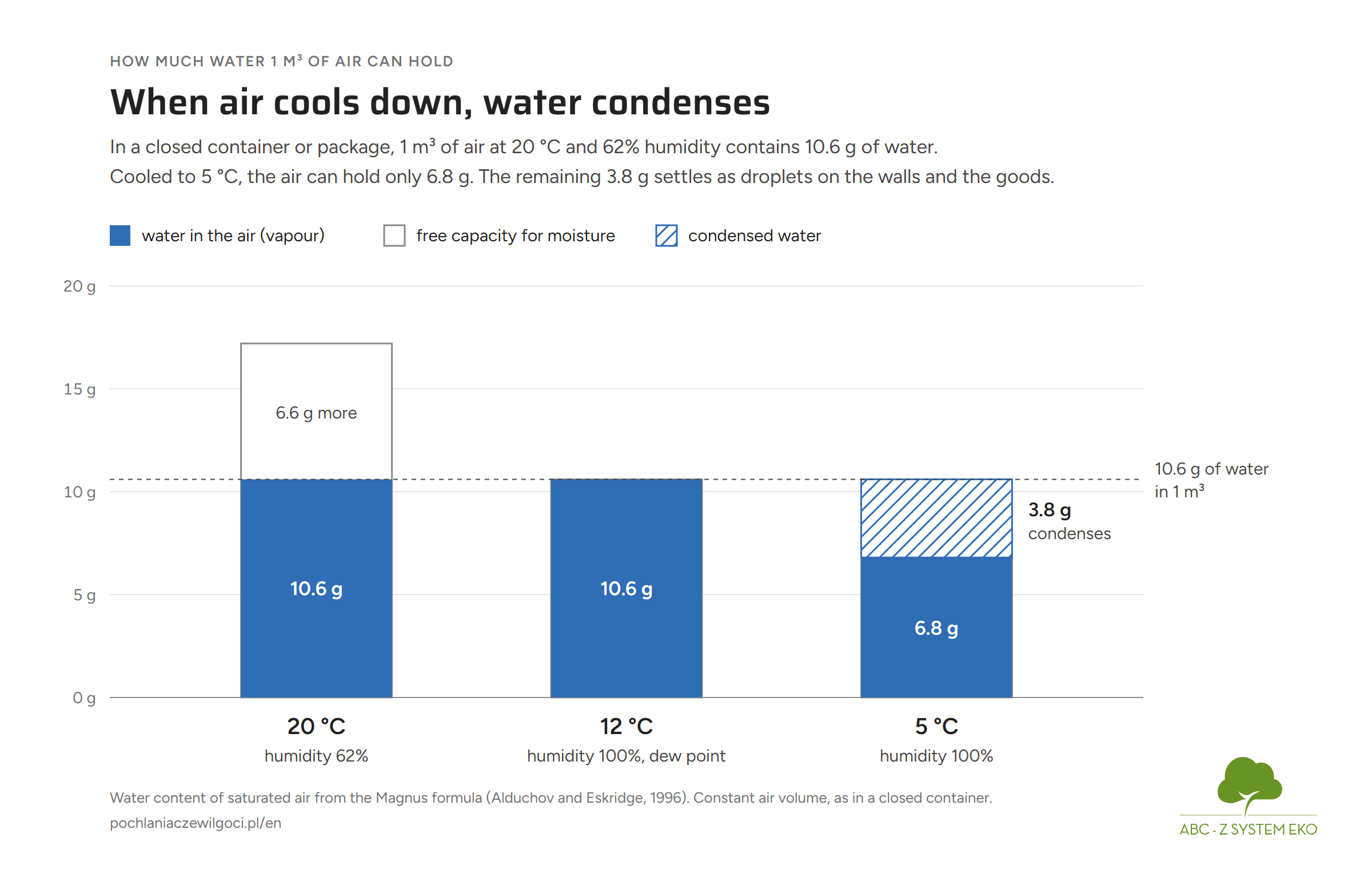
When the air inside a closed package or container cools below its dew point, part of the water vapour condenses on the walls and the goods. The chart shows an example for 1 m³ of air cooled from 20 °C to 5 °C. A desiccant takes up water vapour from the air, so less water is left to condense when the temperature drops.
-
For container cargo we offer three hanging variants. ES K is a 1000 g bag for trips of up to 60 days. ES Clay is a 1000 g bag for trips of up to 30 days. ES Gel is a 750 g strip of six 125 g sachets.
The number of bags depends on the container size, the cargo and the route. Tell us these details and we will propose the variant and the number of bags.
-
Yes, within the documented conditions. ES Basic Dry sachets may be in direct contact, on both sides of the sachet, with dry and dehydrated food and food supplements that require a water activity of aw ≤ 0.65, during long-term storage at room temperature in hermetically closed packaging. They hold PZH hygiene certificate No F.FB.60412.218.2025 and are covered by our declaration of conformity for food contact.
The sachets are not intended for use with liquid food and must not be opened.
Ask about ES bags as a silica gel alternative
Tell us what you pack, the package size and material, and the storage or transport time. If known, include the target humidity and the silica gel sachet size you currently use. We will help you select an ES alternative for these conditions.