Oxygen concentrator systems are used to generate an oxygen-enriched gas stream from atmospheric air. Depending on the design, they may be configured as mobile technical units, compact service units or stationary systems with higher process capacity. A properly selected adsorbent bed is one of the key elements determining their operation.
The operation of oxygen concentrator systems is based on Pressure Swing Adsorption PSA or Vacuum Pressure Swing Adsorption VPSA technology. These processes rely on the cyclic separation of air components using molecular sieves, which are specialised syntetic adsorbents.
During the pressurisation phase, the molecular sieve selectively adsorbs nitrogen, allowing the remaining gas stream to become enriched with oxygen. During the depressurisation phase, the adsorbed nitrogen is desorbed and released from the system, and the operating cycle is repeated.
The process itself does not cause chemical consumption of the adsorbent. However, over time, adsorbent bed performance may deteriorate due to moisture, contaminants, dusting or operating conditions of the unit.
Two main types of molecular sieves are commonly used in oxygen concentrator systems:
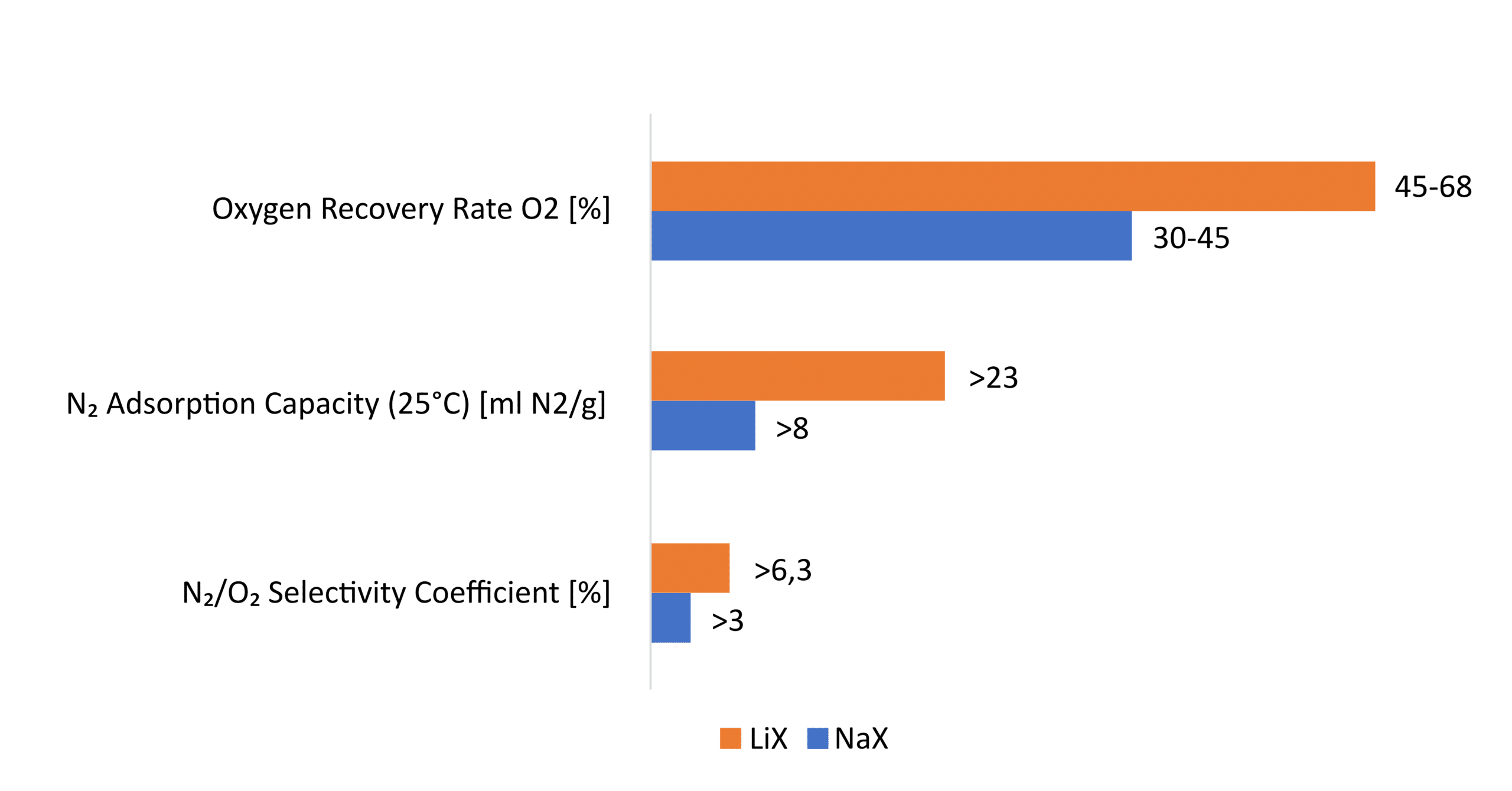
Short comparison of LiX and NaX molecular sieves
LiX — lithium-exchanged X-type molecular sieve — offers higher nitrogen selectivity and higher adsorption capacity. It may support shorter PSA cycles, improved separation efficiency and reduced adsorbent bed volume in properly designed systems.
NaX — sodium-exchanged X-type molecular sieve — provides stable operation, wide availability and a more cost-effective purchase option. It is commonly used in lower-flow units, older system designs and applications where compatibility with the original adsorbent bed configuration is important.
The selection of the appropriate molecular sieve type depends on the concentrator design, required flow rate, adsorbent bed volume, particle size, operating cycle and equipment manufacturer’s recommendations.