How many ES K bags does a container need?
Typical quantities for a transit time of up to 30 days, counted from loading to unloading, including waiting time in ports:
| Container |
Low-moisture cargo [bags] |
Moisture-releasing cargo [bags] |
| 20′ |
15 |
24 |
| 40′ and 40′ HC |
30 |
48 |
Low-moisture cargo: metal, machinery, plastics, electronics, furniture and products made of dry wood. The typical quantity applies to cargo in tight packaging, without wooden pallets and crates, on a route through a temperate climate.
Moisture-releasing cargo: food and agricultural commodities such as grain, flour, coffee, cocoa, sugar and nuts, raw or fresh wood, and goods with a history of mould.
More bags are needed for low-moisture cargo on wooden pallets, in crates or in cartons, and for routes through the tropics or across the equator, the rainy or monsoon season, containers carried on deck, loading in rain and a wet container floor. For these conditions and transit times of up to 30 days, use the upper end of the recommended range: 16 bags in a 20′ container or 32 in a 40′ or 40′ HC container for low-moisture cargo; 28 or 56 bags, respectively, for moisture-releasing cargo.
Transit times of 31-60 days: send us the route and cargo details and we will propose the number of ES K bags for your shipment.
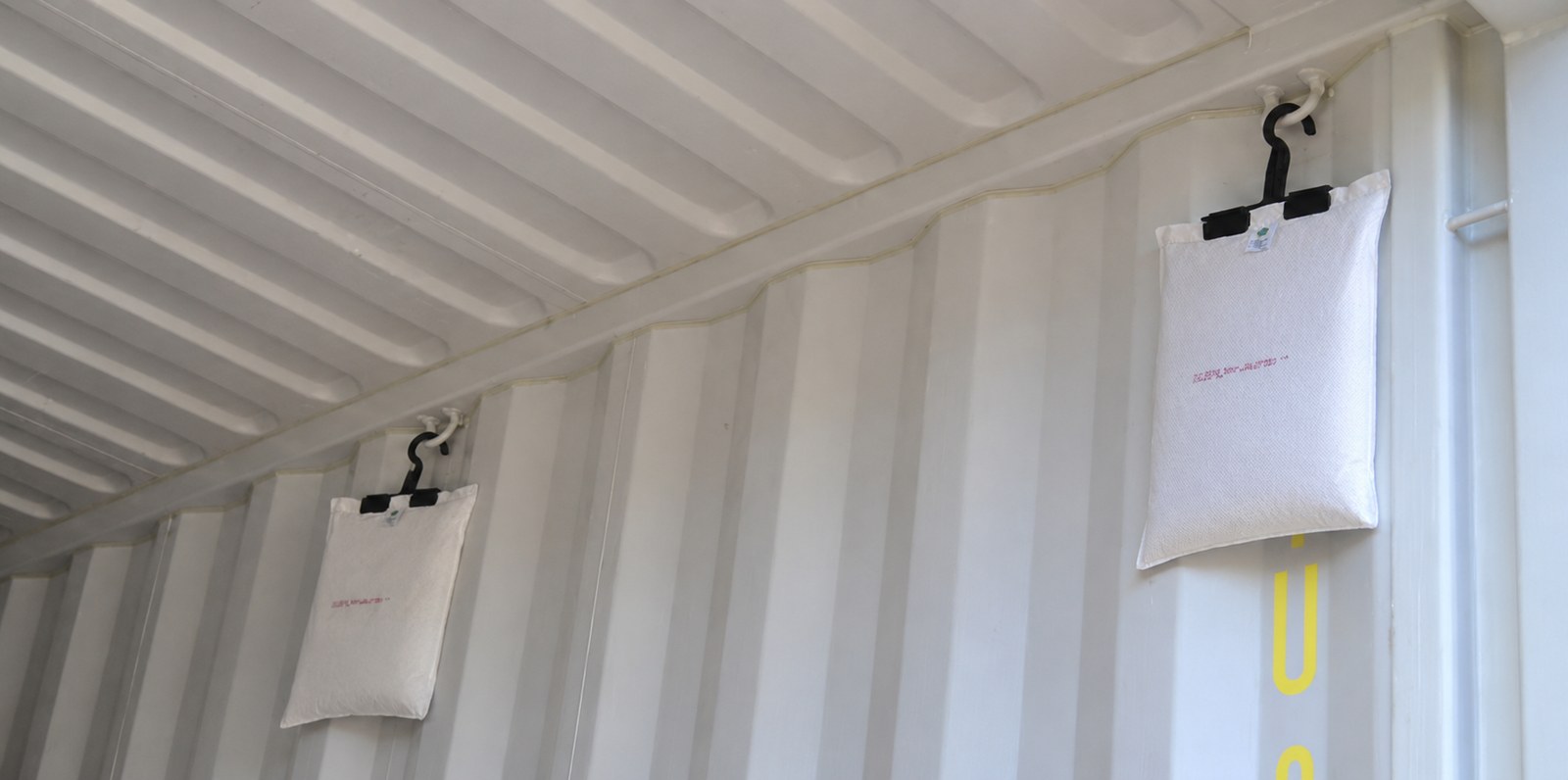
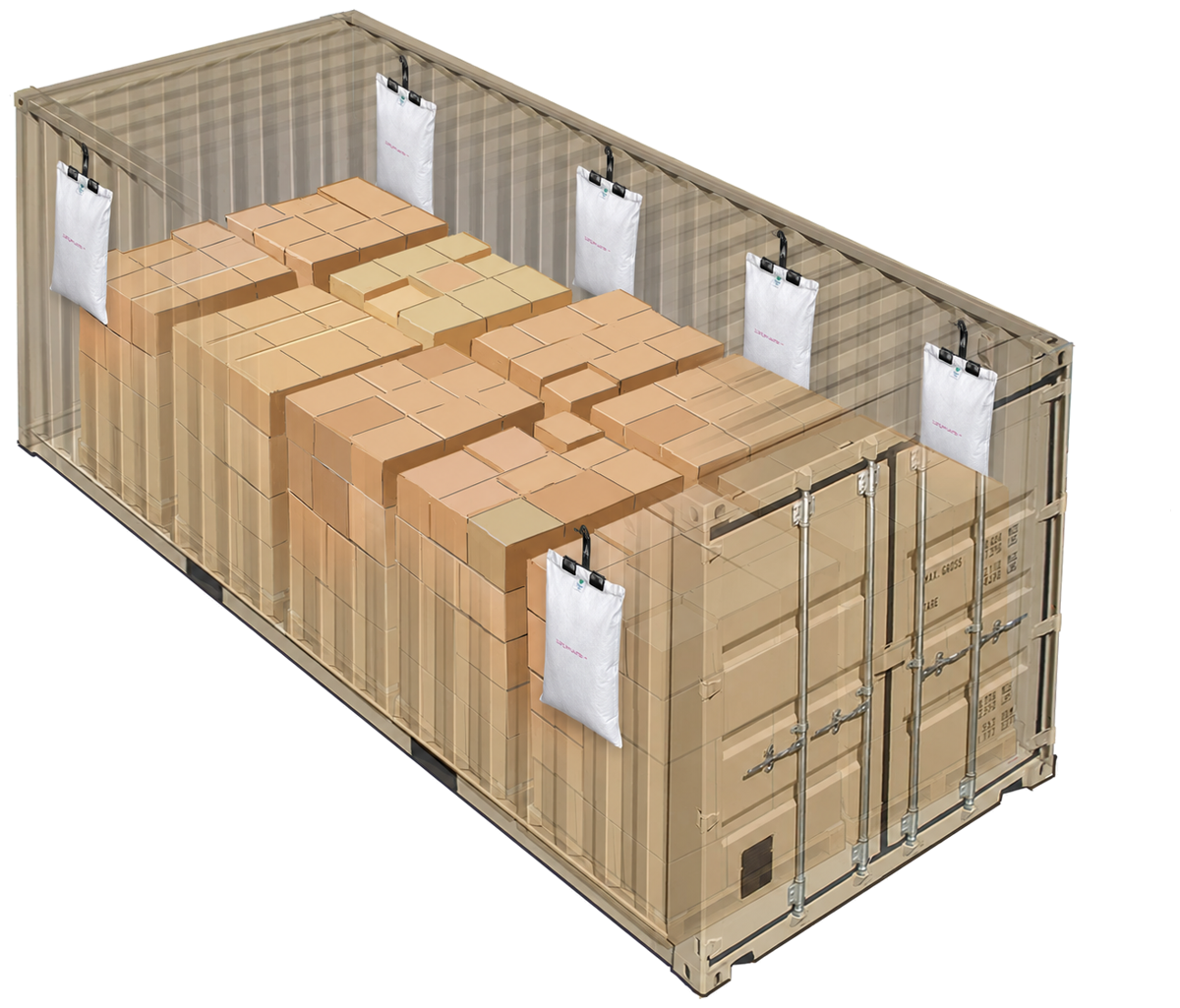
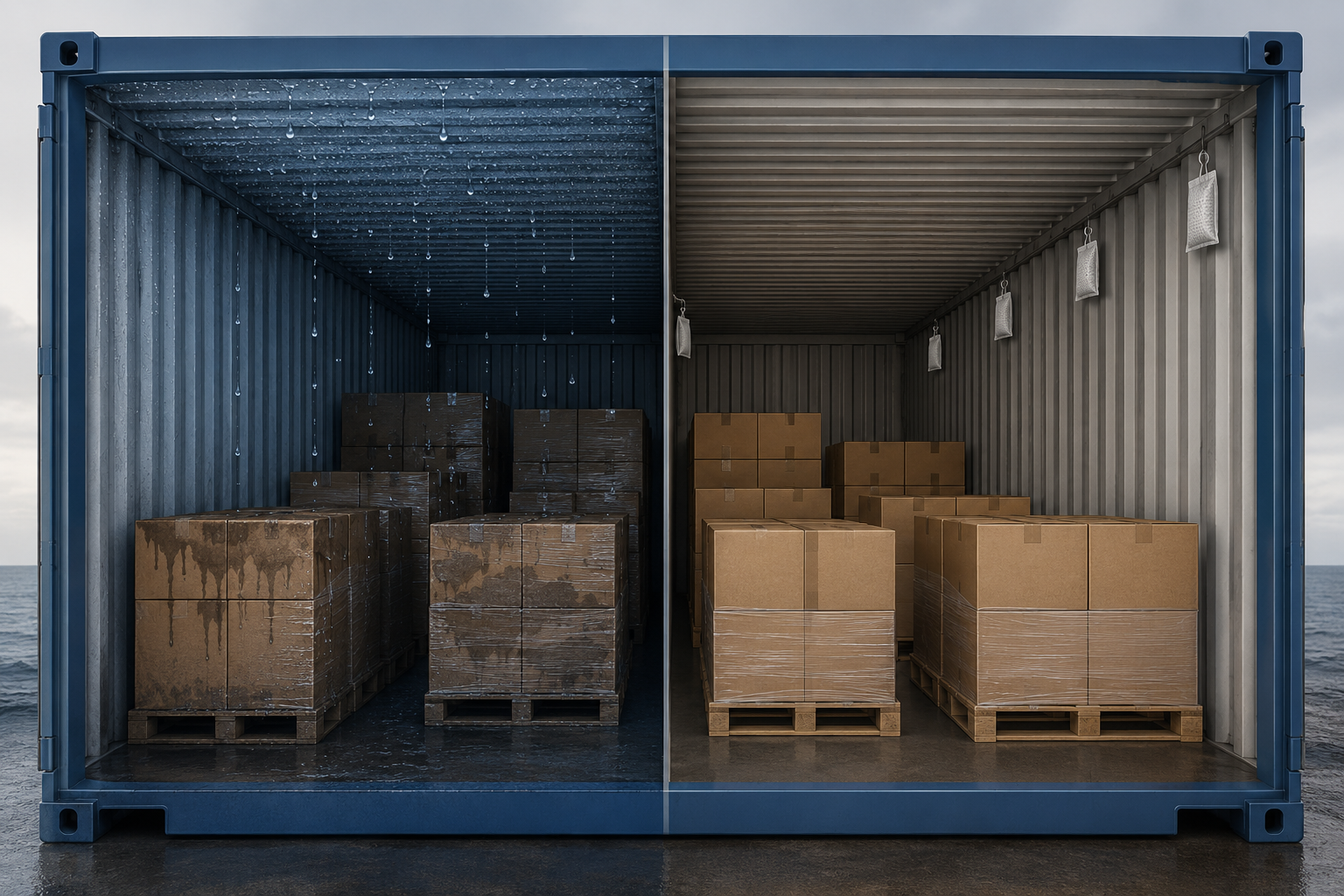
Installation in the container
Hang the bags by their hooks in the upper part of both side walls and near the doors, spaced evenly along the container. Keep them at least 25 mm from the cargo so they cannot be crushed during loading, and leave space for air to circulate around each bag. Do not place the bags on the container floor. Open the sealed outer plastic bag just before installation, as exposure to air reduces the absorption capacity of the bags.