ES Gel Container Desiccant Strips with Calcium Chloride

ES Gel is a hanging container desiccant: a strip of sachets with a mounting hook. The filling contains 60% calcium chloride and modified starch. Calcium chloride absorbs water vapour from the air up to 360% of the filling weight (measured at 23 °C and 95% relative humidity, after 42 days). The starch binds the resulting solution into a gel, which stays inside an undamaged sachet even at full saturation, so the absorbed water does not leak onto the cargo.

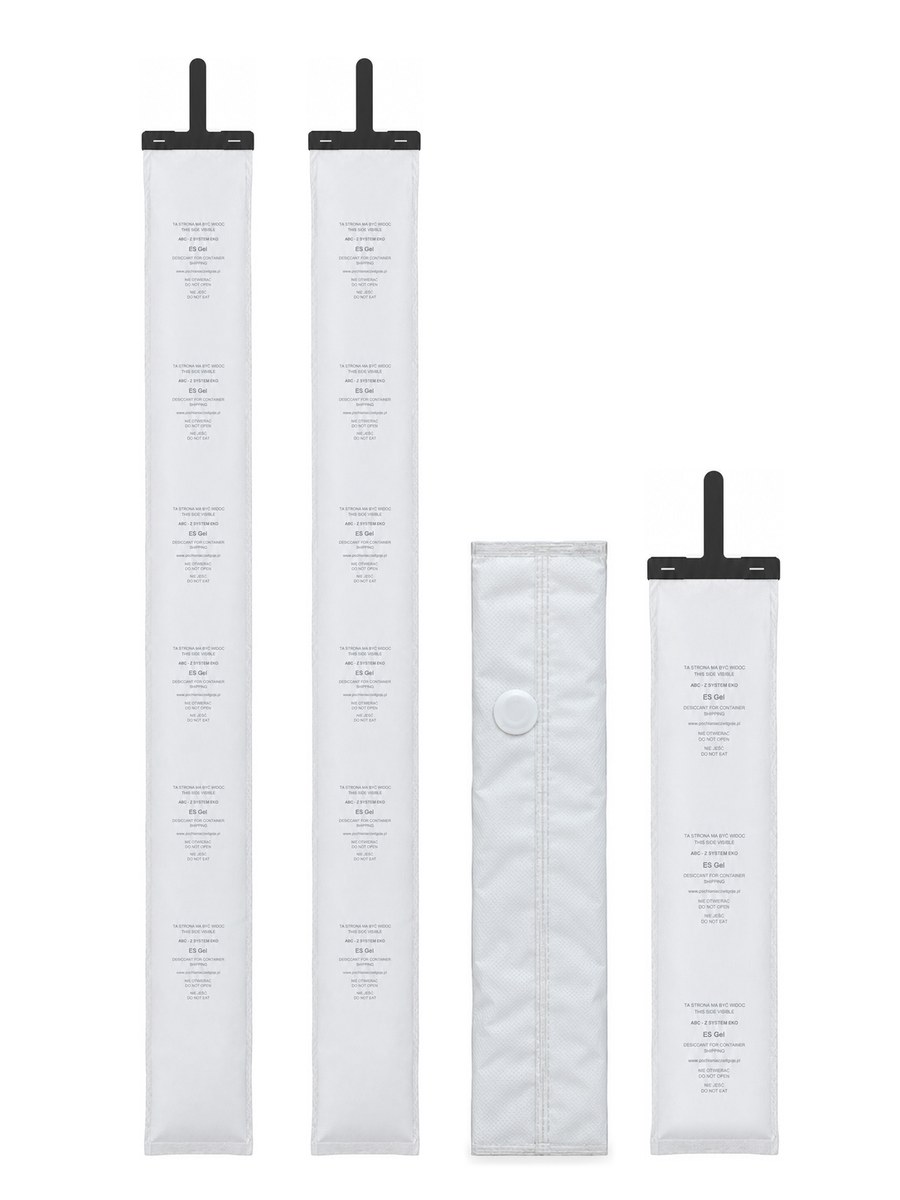
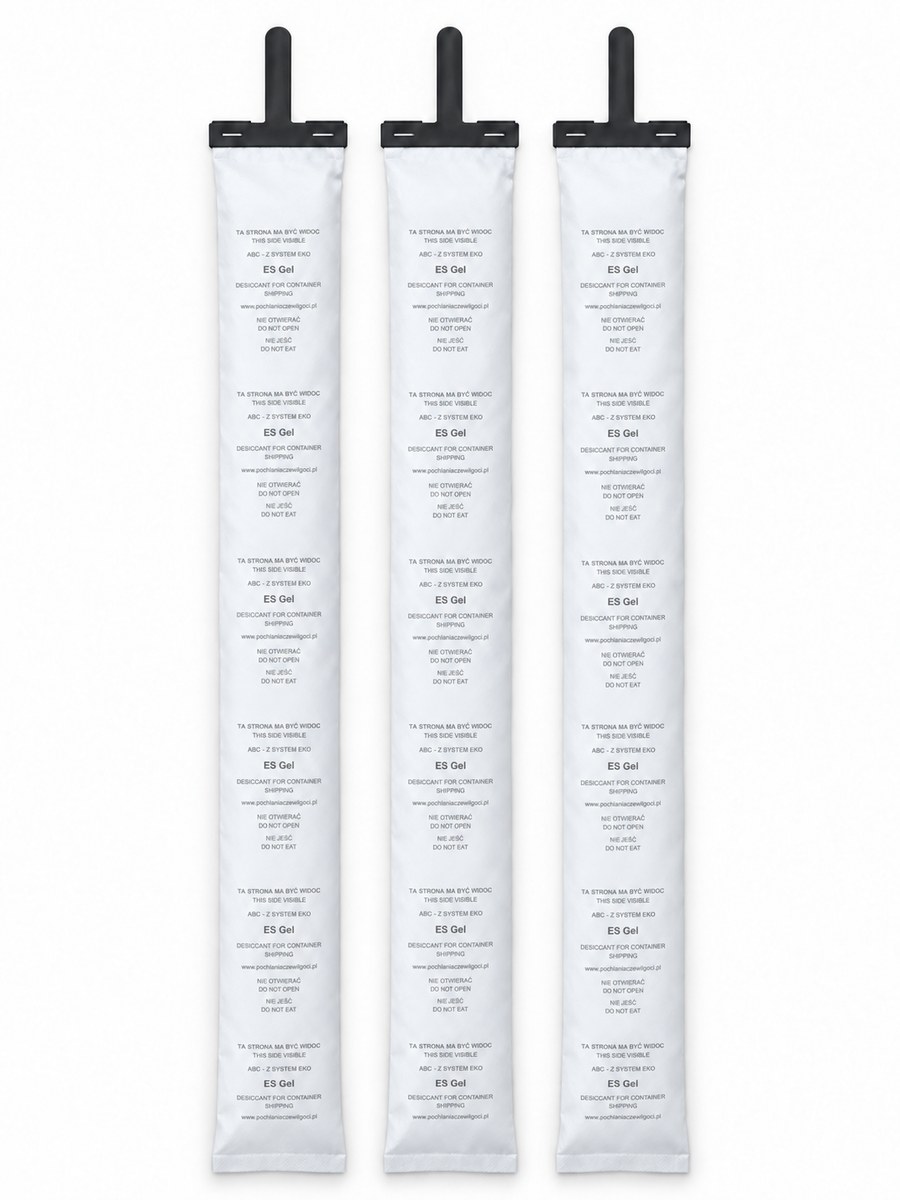
Three ES Gel container desiccant strips with hooks, six sachets each

ES Gel Desiccants for Long Routes and Cargo with Higher Moisture Content

ES Gel desiccants are used for shipments in which goods remain closed inside a container for several weeks and the cargo itself or its packaging releases water vapour. Typical examples are coffee, cocoa, nuts and other agricultural commodities, as well as furniture, machinery, steel components, electronics and textiles. The strips are hung in the corrugations of the container walls, so they take up very little of the cargo space.

Fewer Units for the Same Container

In ES Gel, calcium chloride is the main component of the filling, not an additive to clay. For this reason, a 20′ container with low-moisture cargo and a transit time of up to 30 days needs 8 strips, i.e. 6 kg of filling, instead of 15 to 20 clay-based bags of 1 kg each. Fewer units mean less installation time and lower labour costs.

ES Gel strips with mounting hooks, front and back view

ES Gel Container Desiccants

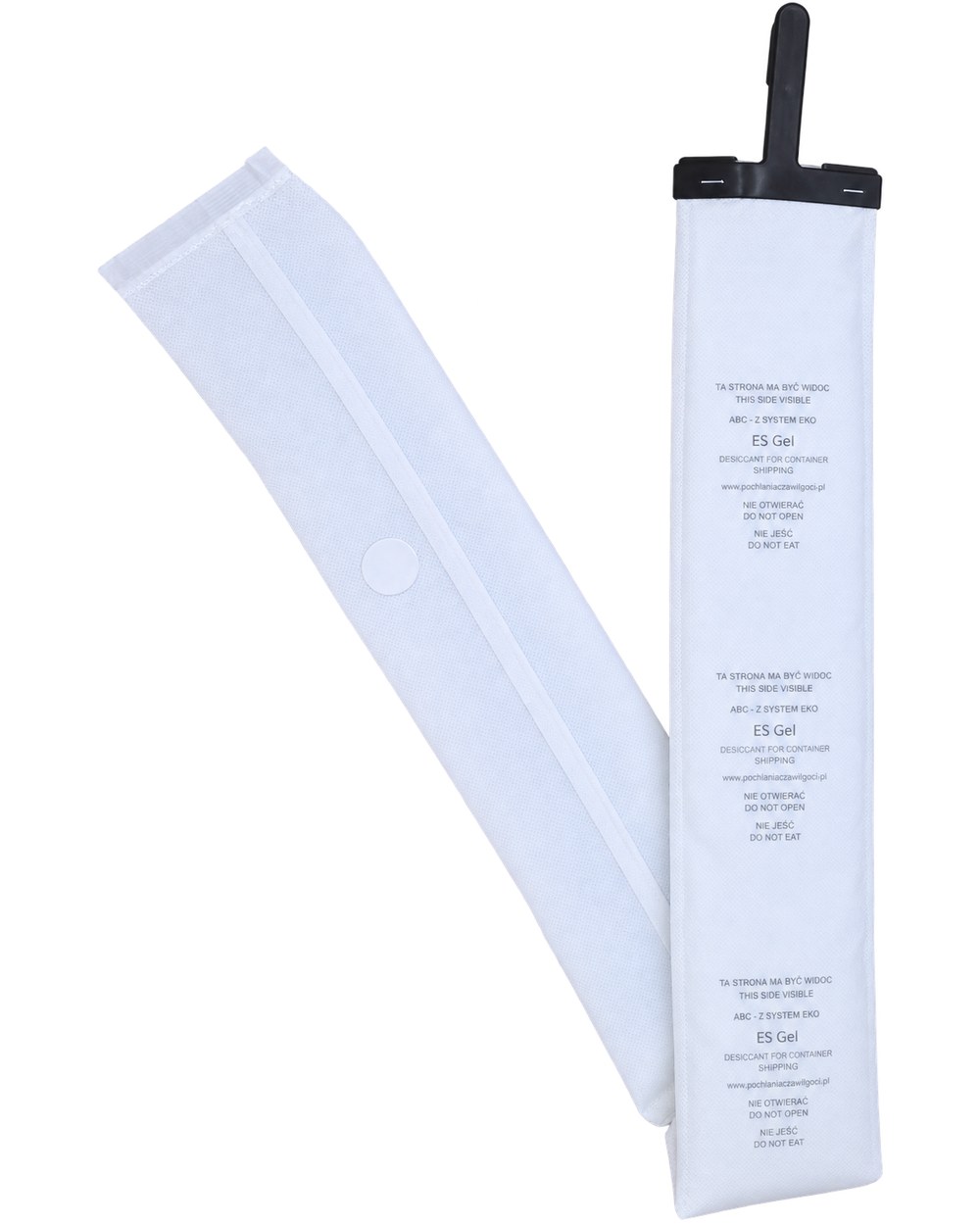
ES Gel is a strip of sachets in a nonwoven sheath, with a hook for hanging inside the container. The modified starch in the filling binds the calcium chloride solution into a gel.

  • Active substance: 60% calcium chloride (CAS 10043-52-4) with modified starch
  • Design: strip of 6 sachets of 125 g each in a nonwoven sheath, with hook
  • Filling weight: 750 g
  • Sachet material: Tyvek® and PE/PP laminate
  • Dimensions with sheath: 1140 x 145 x 20 mm plus 80 mm hook
  • Absorption capacity: up to 360% of the filling weight, i.e. up to 2.7 l of water per strip (23 °C, 95% relative humidity, 42 days)
  • Packaging: 12 strips per carton, strips in plastic bags
  • Shelf life: 24 months in the original, unopened packaging

The absorption capacity was measured at 23 °C and 95% relative humidity over 42 days. In a container, the amount of water absorbed depends on air temperature and humidity, transit time, the type of cargo and the packaging used.

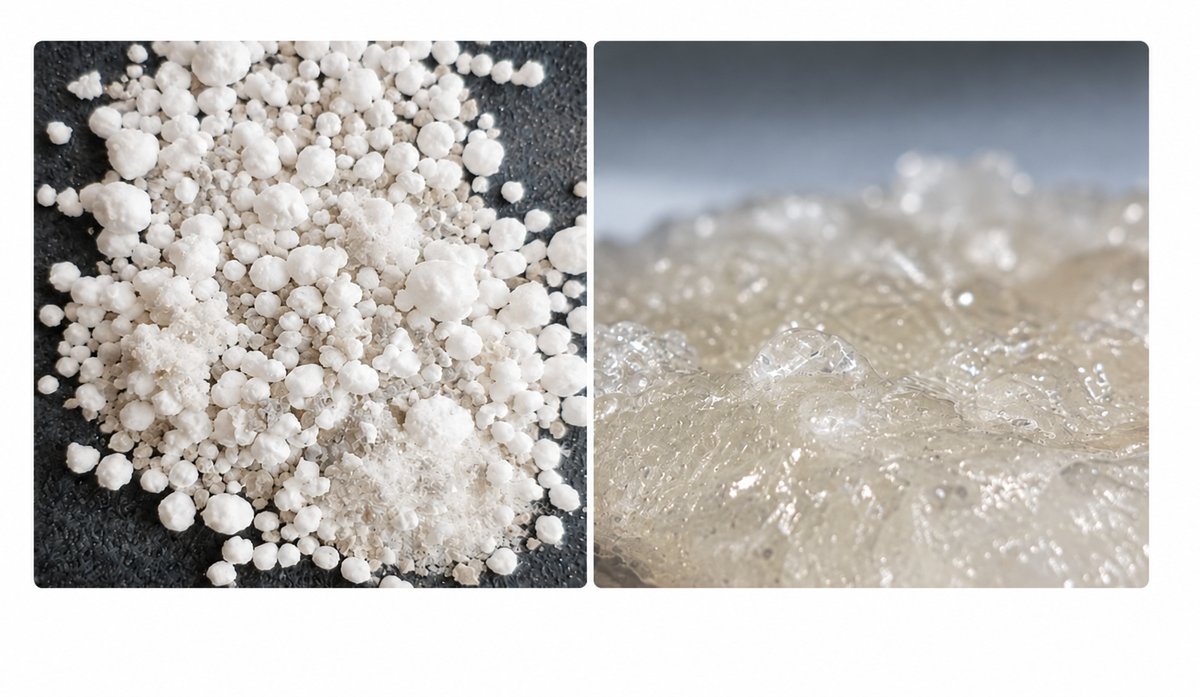
Calcium chloride granules and the gel formed after water absorption

Comparison of Filling and Design

All three container desiccants we supply work on the basis of calcium chloride. In ES K and ES Clay, the filling is bentonite clay impregnated with calcium chloride, with ES K containing more of it. Water is bound in the granules, which do not swell after saturation. In ES Gel, calcium chloride is not carried on a mineral support but is the main component of the filling, and modified starch binds its solution into a gel that is retained in the sachet.

Parameter ES Gel 750 g ES K and ES Clay 1000 g
Filling 60% calcium chloride with modified starch bentonite clay impregnated with calcium chloride (more calcium chloride in ES K)
After saturation gel retained in the sachet granules, no swelling
Declared water absorption up to 360% by weight (23 °C, 95% relative humidity, 42 days) ES K up to 80%, ES Clay up to 60% by weight (25 °C, 95% relative humidity, approx. 55 days)
Form strip of 6 sachets with hook bag with hook
Sachet material Tyvek® and PE/PP laminate, nonwoven sheath plastic nonwoven

The absorption values in the table come from measurements under different conditions, so they cannot be used to compare the products directly or to calculate the number of units for a container.

Absorption Capacity of ES Gel over Time

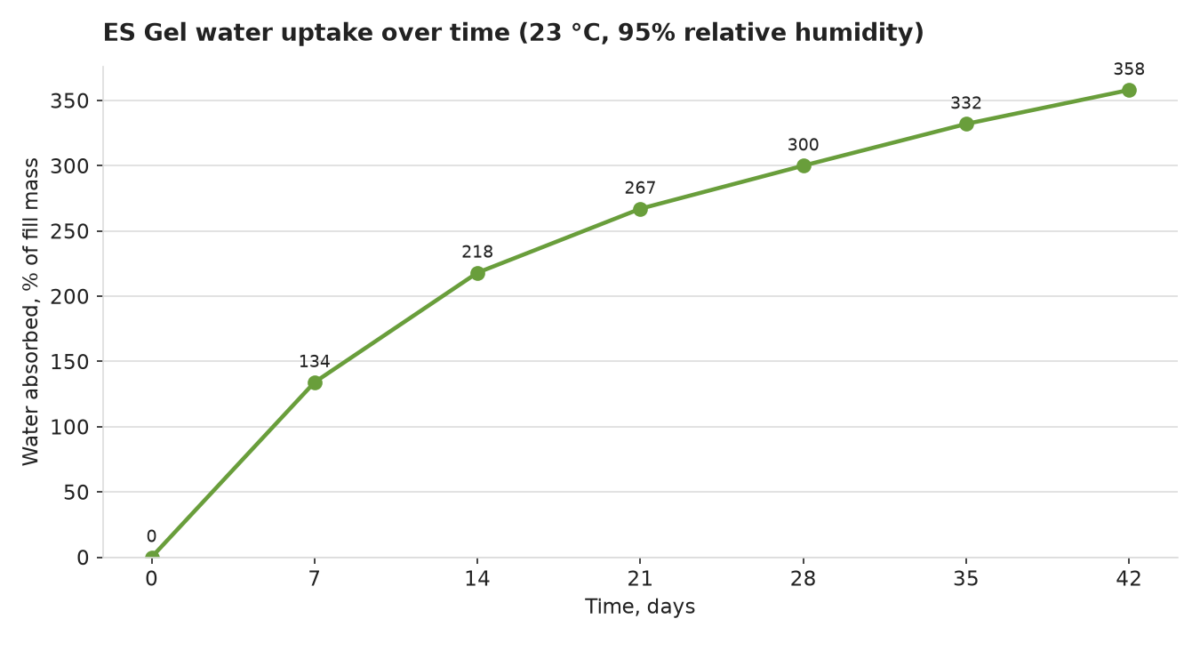
ES Gel absorbs water gradually. At 23 °C and 95% relative humidity, the absorption capacity is 134% of the filling weight after 7 days, 300% after 28 days and 358% after 42 days. In this measurement, the absorption capacity was still increasing between day 28 and day 42. The amount of water absorbed in a container depends on the transport conditions.

ES Gel absorption capacity over time: 134% after 7 days, 300% after 28 days, 358% of the filling weight after 42 days, 23 °C, 95% relative humidity

Which Desiccant to Choose

For most shipments, we recommend ES Gel: the smallest number of units is needed per container, and the desiccant is also designed for routes of up to 60 days. ES Clay is used for transit times of up to 30 days, mainly in 20′ containers with low-moisture cargo. ES K is designed for routes of up to 60 days with high-value goods and where the strength of the bag matters.

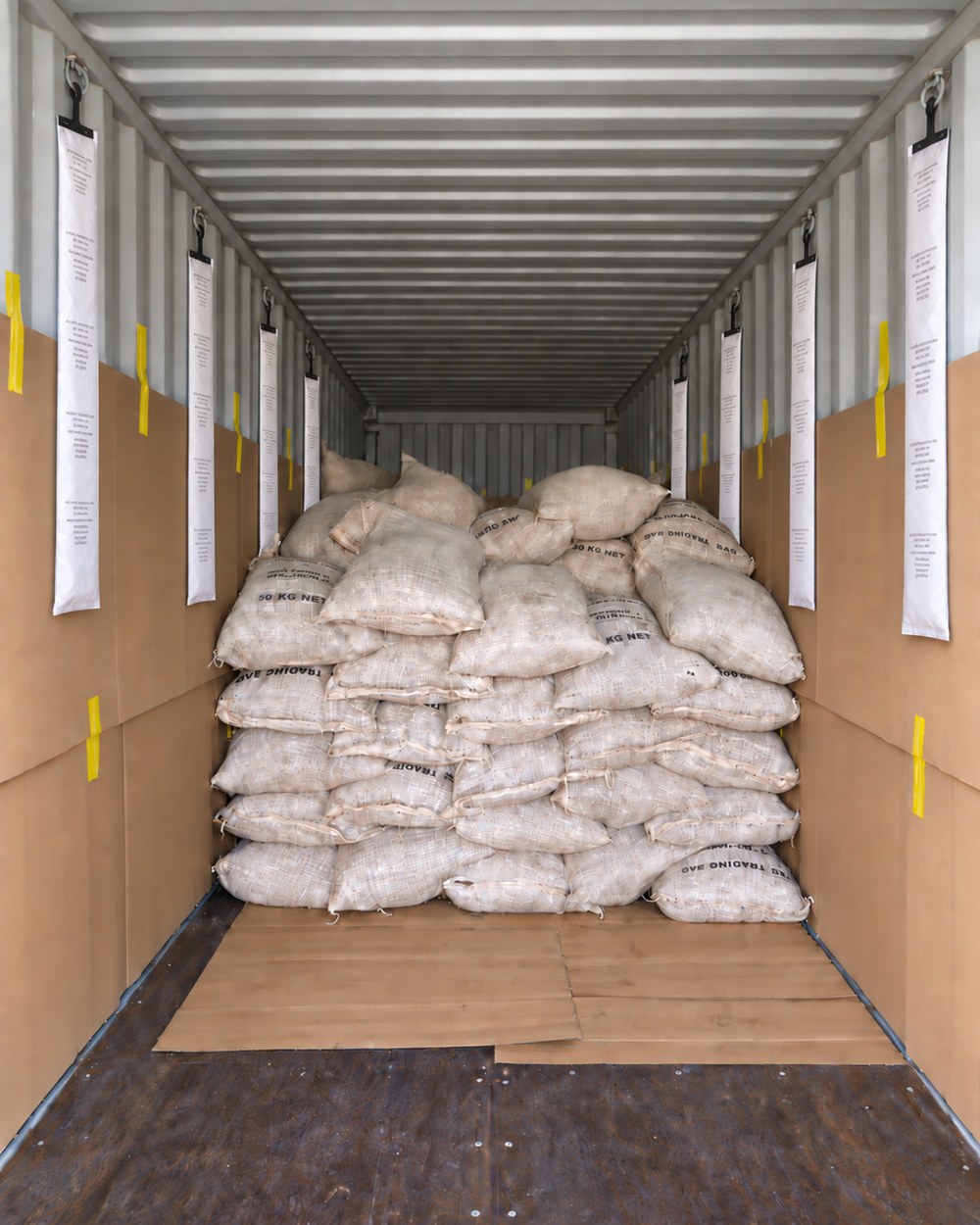
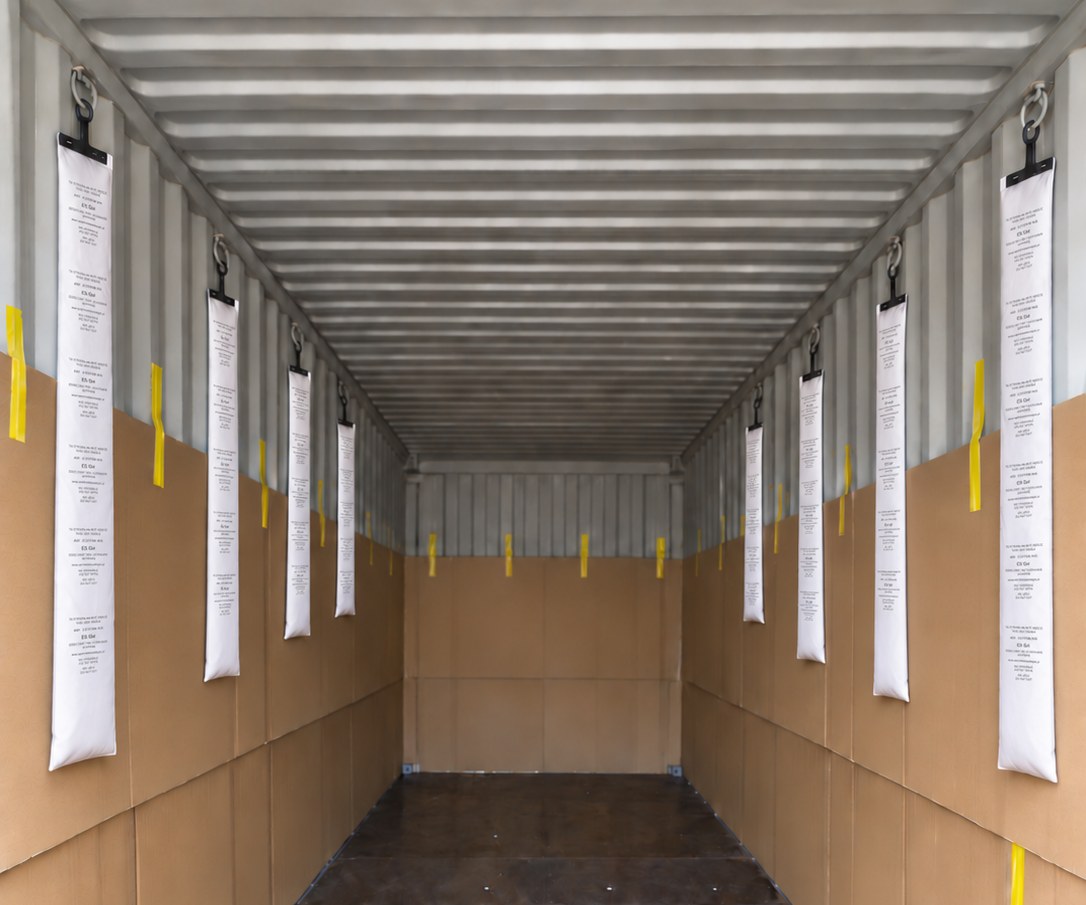
ES Gel strips distributed evenly on both side walls of a container

How Many ES Gel Desiccants Does a Container Need?

The number of desiccants depends on the container size, the type of cargo, the packaging used, and the transit time and conditions. For dosage purposes, moisture-releasing cargo means goods that contain moisture and release it during transport: food and agricultural commodities such as grain, flour, coffee, cocoa, sugar or nuts, as well as fresh wood and goods on which mould has previously appeared. Low-moisture cargo includes, for example, metal, machinery, plastics, electronics, furniture and products made of dry wood.

The values in the tables apply to cargo in tight packaging, without wooden pallets and crates, on a route through a temperate climate. One strip is a complete ES Gel unit of 6 sachets; the total filling weight is given in brackets.

20′ container

Transit time Low-moisture cargo Moisture-releasing cargo
up to 30 days 8 strips (6 kg) 12 strips (9 kg)
31 to 45 days 10 strips (7.5 kg) 15 strips (11.25 kg)
46 to 60 days 12 strips (9 kg) 18 strips (13.5 kg)

40′ and 40′ HC container

Transit time Low-moisture cargo Moisture-releasing cargo
up to 30 days 14 strips (10.5 kg) 21 strips (15.75 kg)
31 to 45 days 18 strips (13.5 kg) 27 strips (20.25 kg)
46 to 60 days 21 strips (15.75 kg) 32 strips (24 kg)

Transit time covers the period from loading to unloading, including waiting time in ports. For transit times over 60 days, we calculate the quantity for the specific shipment.

More desiccants are required for low-moisture cargo on wooden pallets, in crates or in cartons, for routes through the tropics and across the equator, in the rainy or monsoon season, for containers carried on deck, when loading in rain and when the container floor is wet. For a transit time of up to 30 days, this means up to 11 strips for low-moisture cargo and up to 16 strips for moisture-releasing cargo in a 20′ container, and up to 20 and 28 strips respectively in a 40′ container. The quantities given are a starting point; the shipper should confirm that they suit the specific cargo.

Installation in the Container

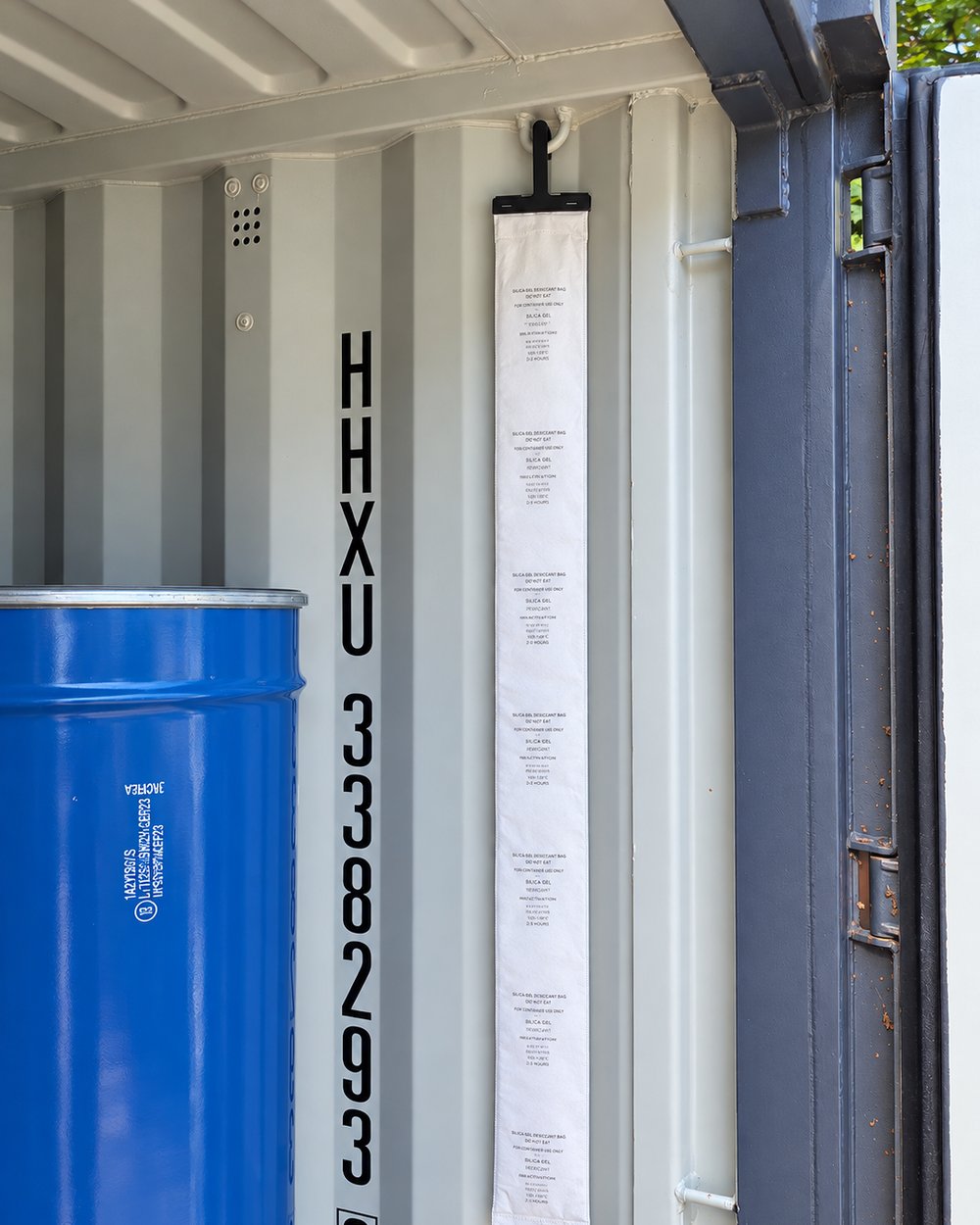
Take the strips out of the plastic bag immediately before installation, because the desiccant starts binding moisture as soon as it comes into contact with air. Distribute them evenly on both side walls and near the doors, and hang them vertically on the hooks in the upper part of the walls, at least 25 mm from the cargo. Do not place the desiccants on the container floor.
Container rain caused by condensation inside a loaded shipping container

Container Rain and Cargo Sweat in Shipping Containers

Moisture in a container may come from the air, pallets, packaging, auxiliary materials and the cargo itself. During sea freight, the container passes through changing temperature and humidity conditions. When the walls and ceiling of the container become cooler than the air inside, water vapour may condense on them.

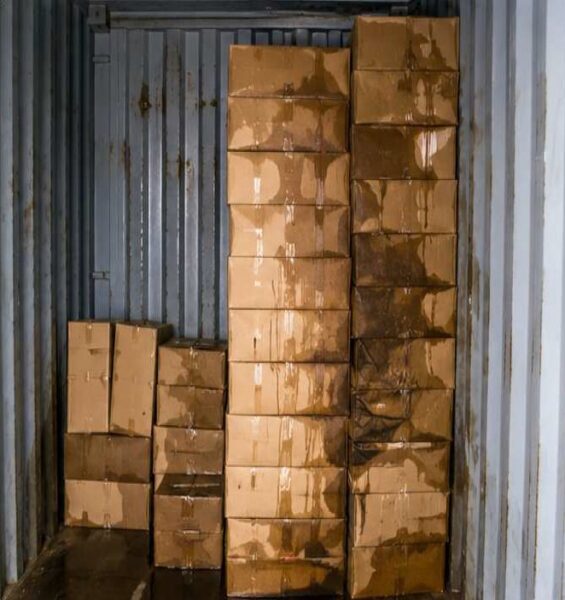
This is how the phenomenon known as container rain occurs: water droplets forming on cold container surfaces may fall onto the cargo. Moisture also condenses directly on the goods when they are cooler than the surrounding air. This is known as cargo sweat. This increases the risk of wet cartons, corrosion of metal parts, mould growth and damage to the transported goods.

Damp and deformed cartons in a container after sea transport

ES Gel desiccants reduce the amount of water vapour in the air inside the container and thereby limit the risk of condensation.

Need Desiccants for a Container on a Long Route?

Send us information about the type of cargo, packaging, container size, route and the time from loading to unloading. We will help you select the number of ES Gel desiccants or suggest a suitable ES K or ES Clay variant.

Request an Offer

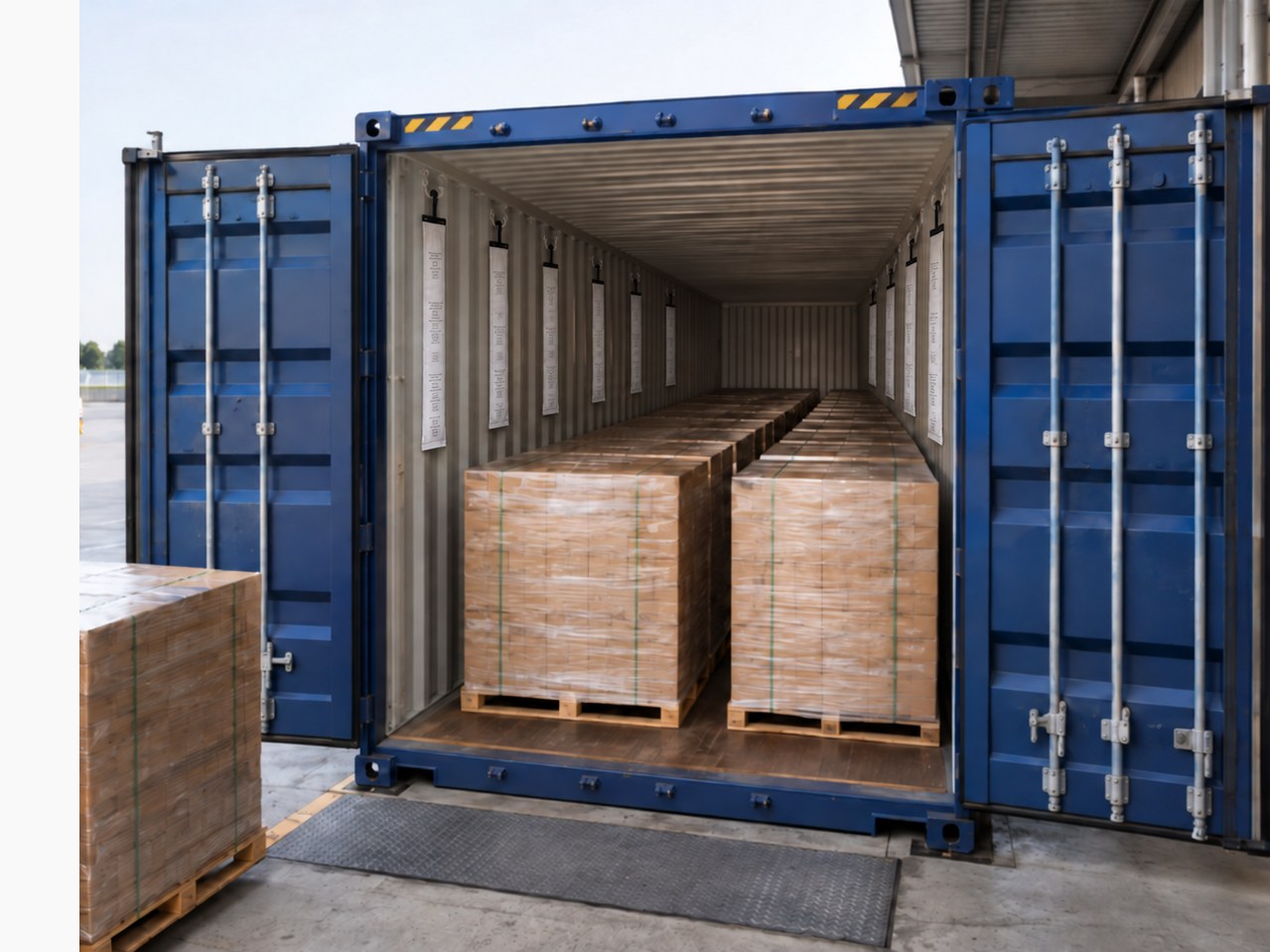
Pallets being loaded into a shipping container with ES Gel desiccants hanging inside

ES Gel Desiccants in Container Transport

During an export shipment, the cargo remains closed inside a container for many days or weeks. During this time, the ambient temperature changes, and with it the humidity conditions inside the cargo unit. Water vapour comes not only from the air, but also from pallets, cartons, interlayers and the transported goods themselves. ES Gel container desiccants bind excess moisture in the cargo space and thus reduce the risk of water vapour condensing on the walls, ceiling and cargo.

How Does a Calcium Chloride Container Desiccant Work?

Calcium chloride is a strongly hygroscopic substance: it absorbs water vapour from the air and dissolves in it, forming a solution. In ES Gel desiccants, modified starch binds this solution into a gel, which stays inside an undamaged sachet made of Tyvek® and PE/PP laminate even at full saturation, so the absorbed water does not leak onto the cargo.

Storage, Handling and Disposal

Store ES Gel desiccants in the original, unopened packaging; their shelf life is 24 months. Keep unused strips tightly closed so that they do not absorb moisture before installation. Calcium chloride causes serious eye irritation, so do not open damaged sachets, and handle any contact with the filling in accordance with the safety data sheet. After unloading the container, remove the used desiccants and dispose of them in accordance with local regulations.

Documentation and Delivery

The technical data sheet and the safety data sheet for ES Gel are available for download. On request, we provide information about availability, packaging and delivery terms, and help select the number of desiccants for a specific shipment.

ES Gel strip with mounting hook, six sachets in a nonwoven sheath