How to choose a silica gel type
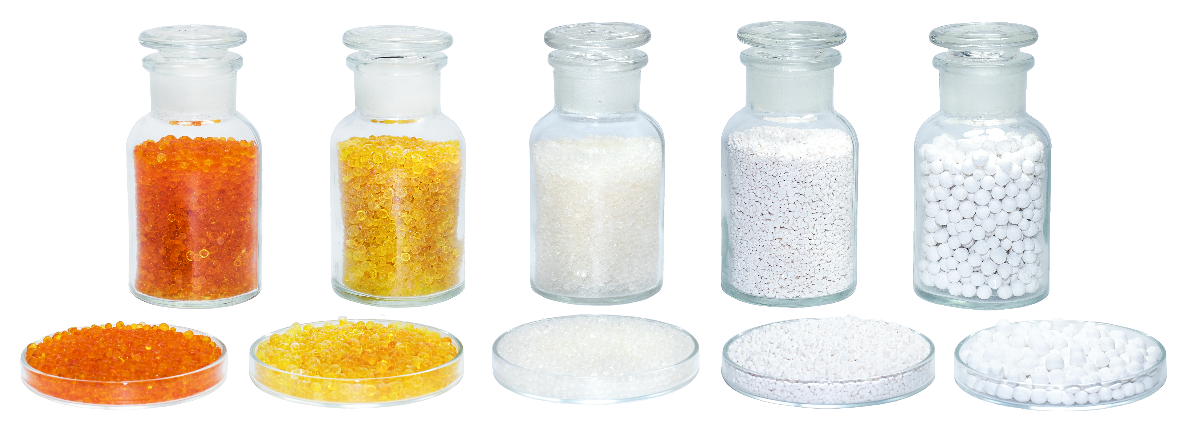
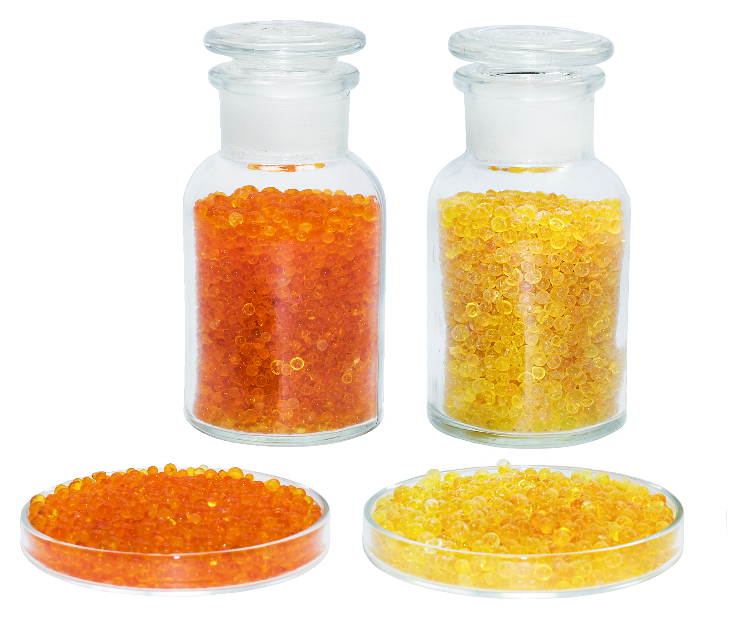
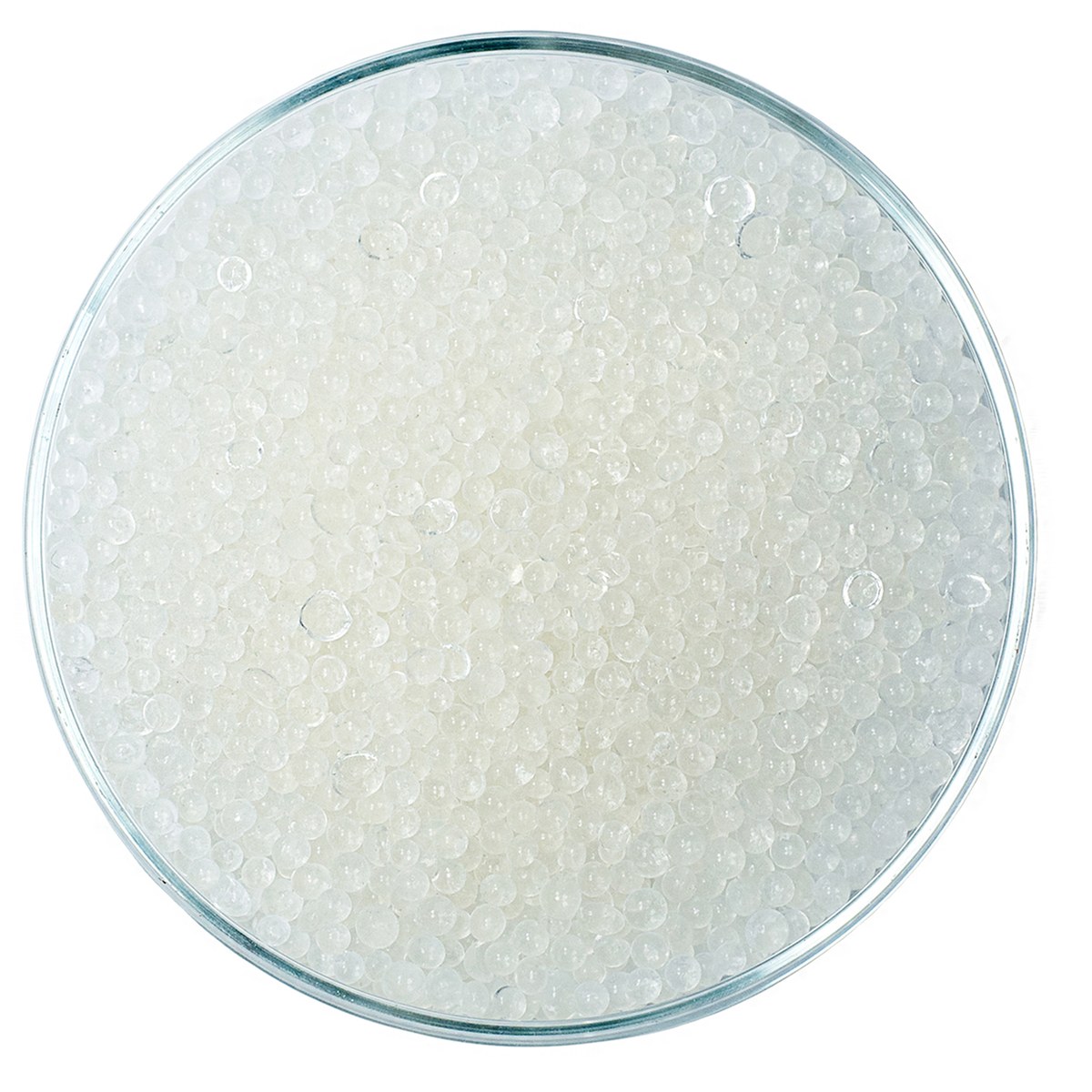
Four properties help distinguish industrial silica gels: pore structure, resistance to liquid water, composition and the presence of a moisture indicator. These properties can overlap. Our orange indicating gel, for example, is a narrow-pore type A gel.
They are a starting point for selection. The grade, particle size and bed arrangement must match the gas or liquid and the inlet conditions. They must also suit the required performance and the equipment’s regeneration method.
Narrow-pore silica gel (type A) has narrow pores and a large internal surface. Type A generally adsorbs more water vapour than type B at low relative humidity. The chart below compares two example grades at 25 °C.
Mesoporous silica gel (type B) has medium-sized pores. It generally adsorbs less water vapour than type A at low relative humidity and more at high relative humidity. Compare the data for the selected grades under the same conditions.
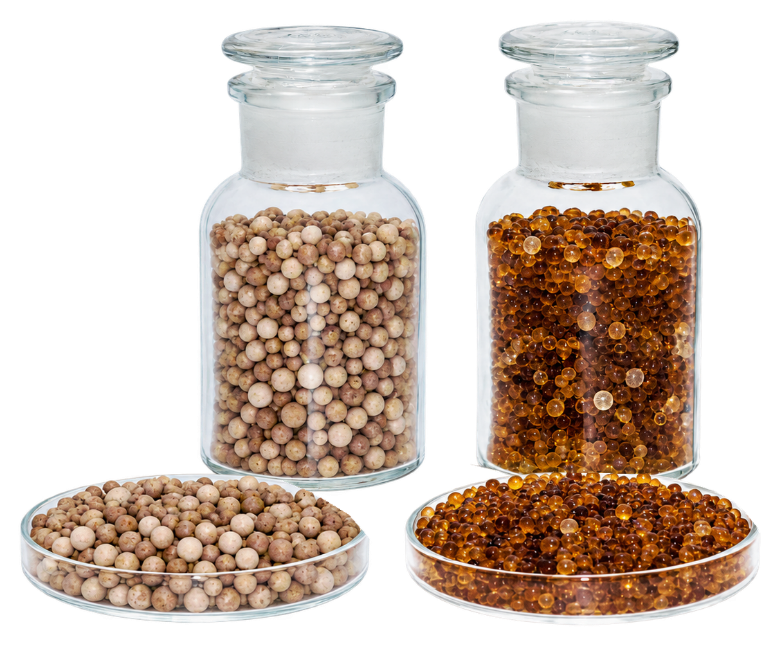
Wide-pore silica gel has wide pores and a high pore volume. It can take up large amounts of water vapour at high relative humidity. Selected grades are used as moisture-protection layers in drying processes, but this does not mean they are resistant to liquid water.
Water-resistant silica gel (FNG type) is a gel with medium to wide pores in hard beads that resists contact with liquid water. It is used as an inlet guard layer to protect the main adsorbent bed.
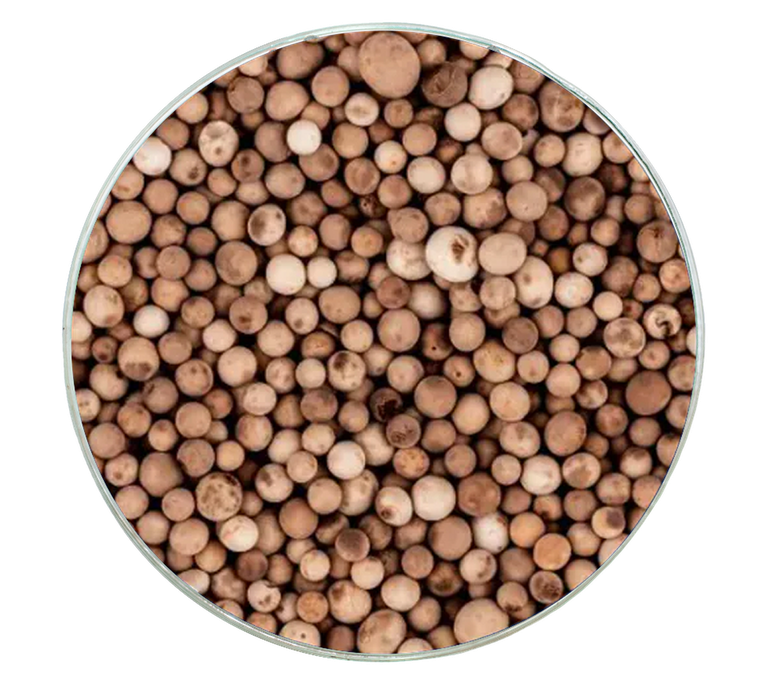
Alumino-silicate gels, type R and type WS, are hard beads of silicon dioxide that also contain aluminium oxide. Type R is used as the main drying bed and is not resistant to liquid water. Type WS is water-resistant and protects type R or other adsorbents; suitable WS grades can also form a standalone bed.
Resistance to liquid water and suitability for hot, humid regeneration gas are two different properties. A gel that tolerates contact with water is not automatically suitable for heat-of-compression dryers, so check the data sheet of the selected grade.
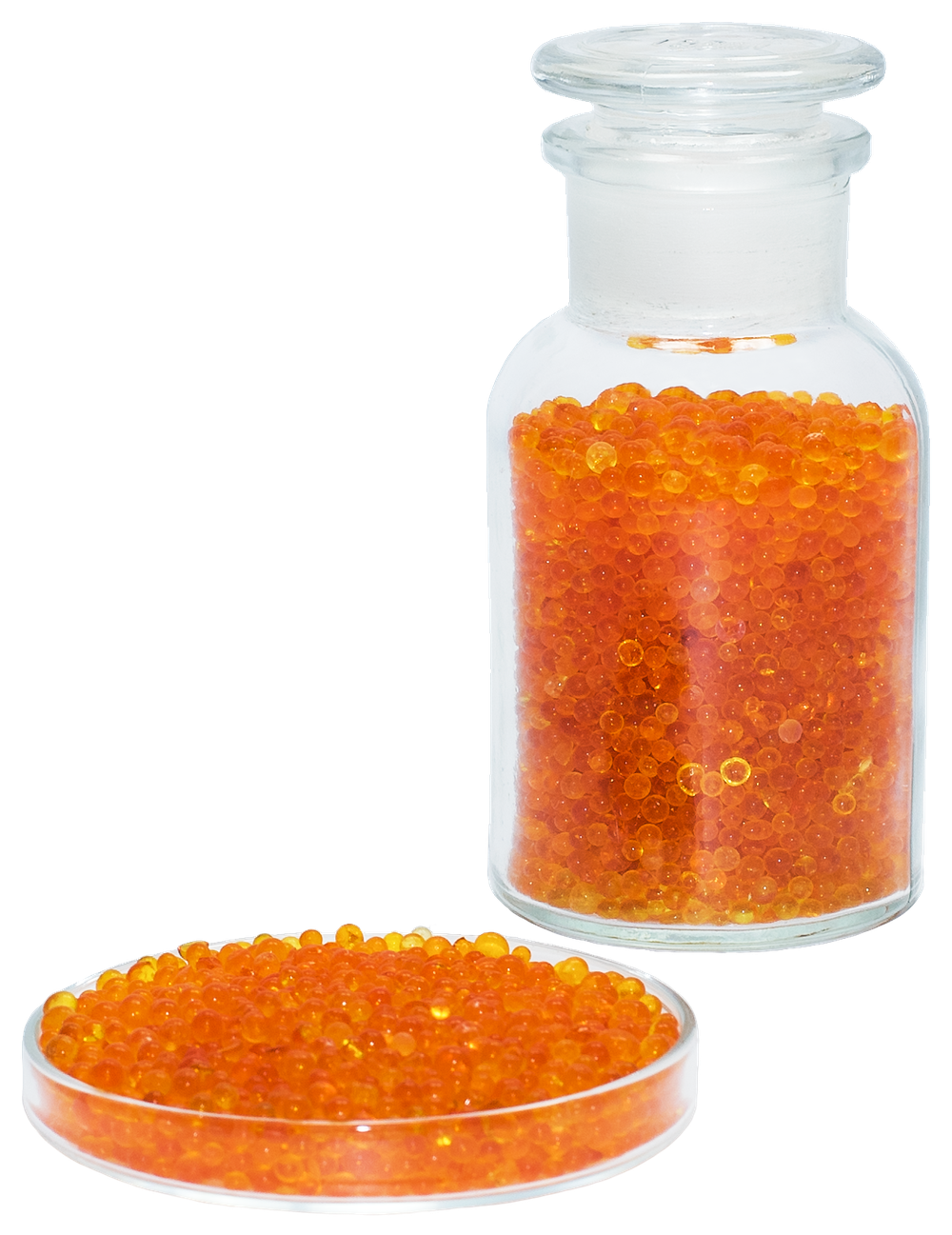
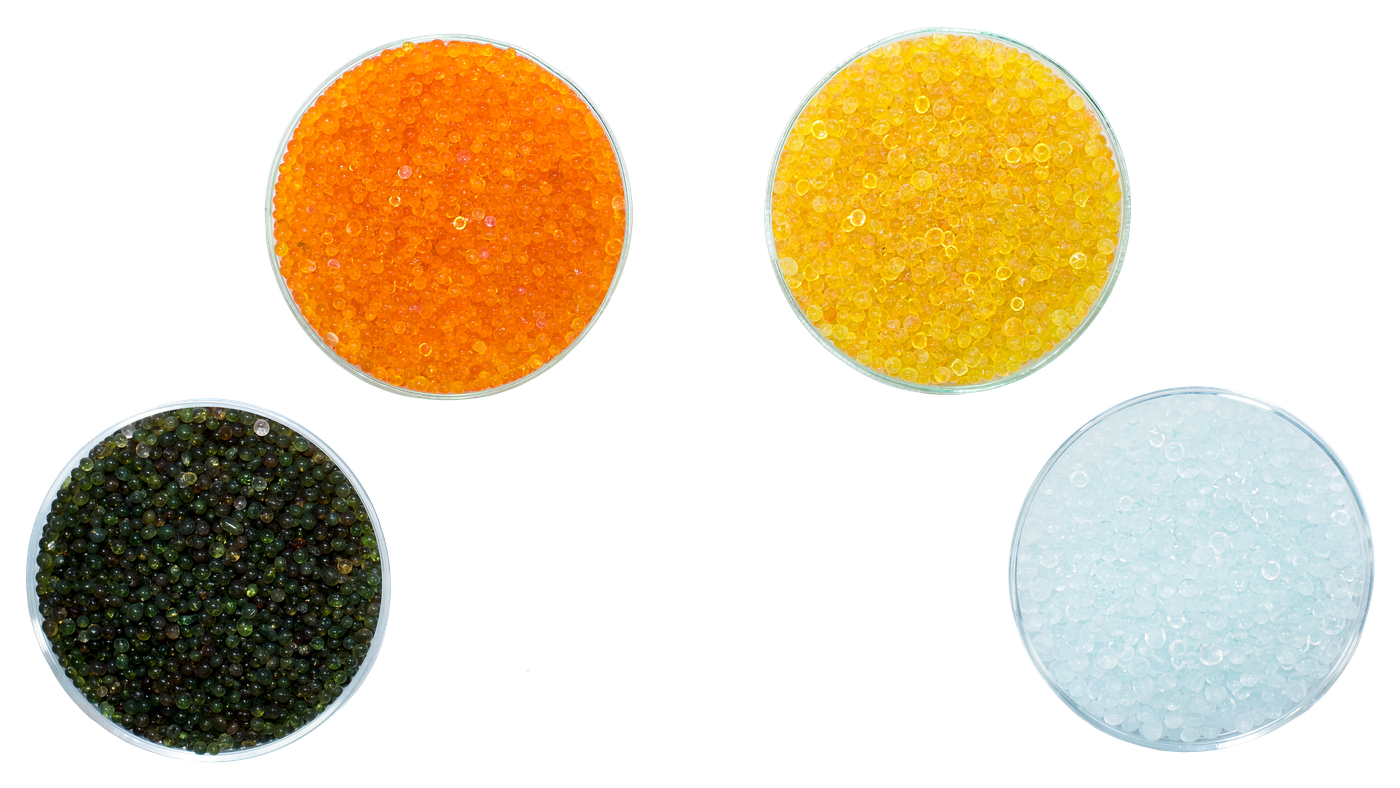
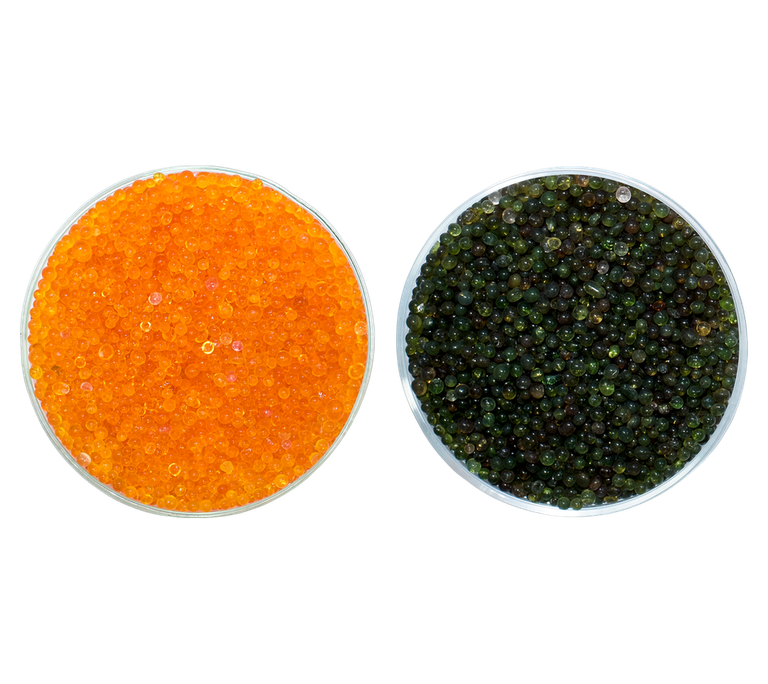
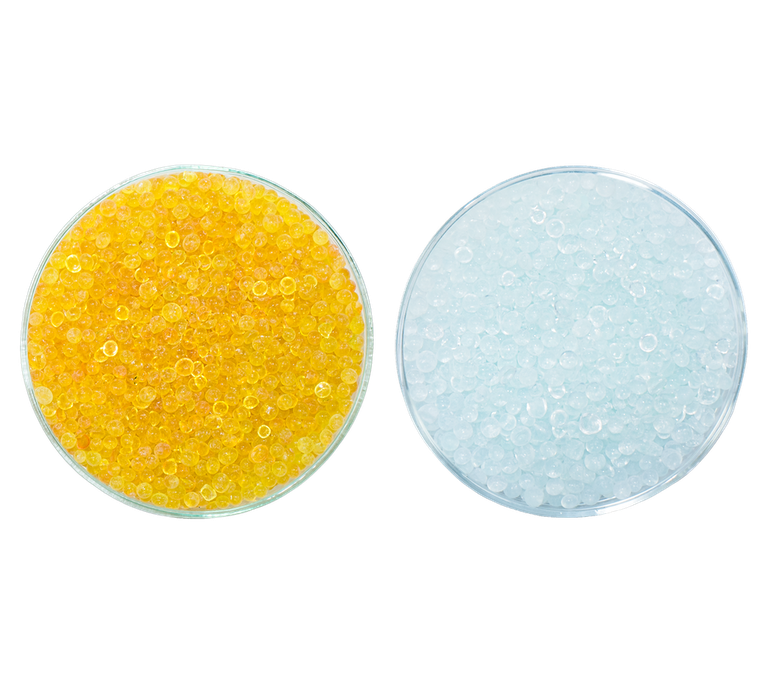
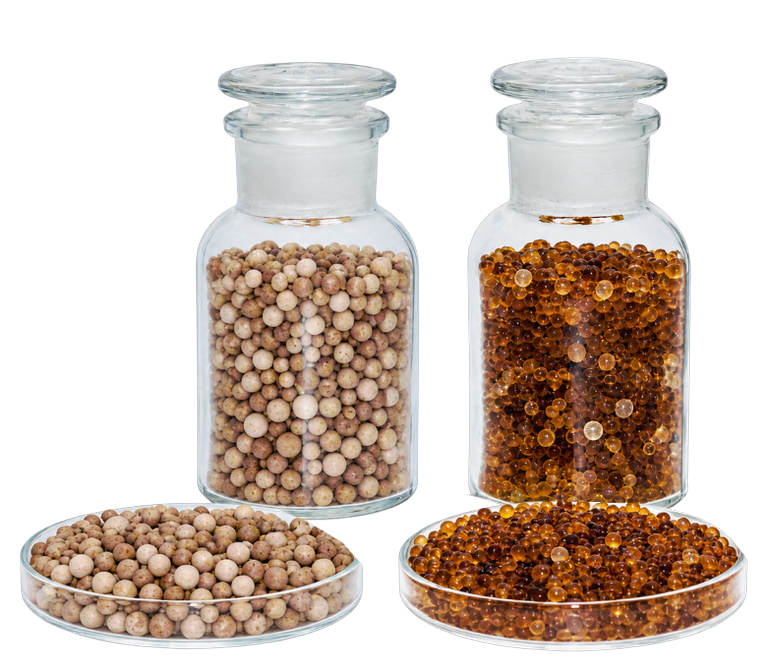
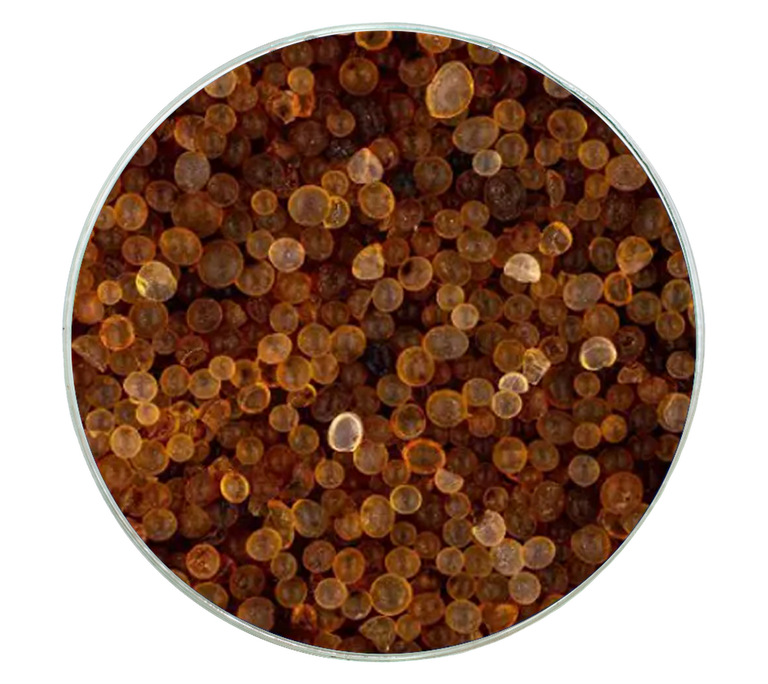
Indicating silica gel contains a moisture indicator. Our orange gel turns from orange to dark green, and its indicator contains no cobalt compounds. The yellow gel turns light blue.
Silica gel types at a glance
| Type |
Structure or composition |
Resistance to liquid water |
Typical use |
| Narrow-pore silica gel (type A) |
Narrow pores |
Do not use as a water-resistant guard layer |
Air and gas drying |
| Mesoporous silica gel (type B) |
Medium pores |
Not confirmed here; check the selected grade |
Moisture adsorption at high relative humidity |
| Wide-pore silica gel |
Wide pores and a high pore volume |
Not confirmed here; check the selected grade |
Moisture adsorption at high humidity, catalyst support and liquid purification |
| Water-resistant silica gel (FNG type) |
Medium to wide pores, hard beads |
Water-resistant |
Guard layer on the inlet side of a bed |
| Orange and yellow indicating silica gel |
Silica gel with a moisture indicator |
Check the selected grade |
Visual indication of moisture uptake |
| Silica gel type R (alumino-silicate) |
Silicon dioxide with a small amount of aluminium oxide |
Not resistant |
Main drying bed for compressed air and technical gases |
| Silica gel type WS (alumino-silicate) |
Silicon dioxide with a small amount of aluminium oxide |
Water-resistant |
Guard layer; suitable grades can also form a standalone bed |
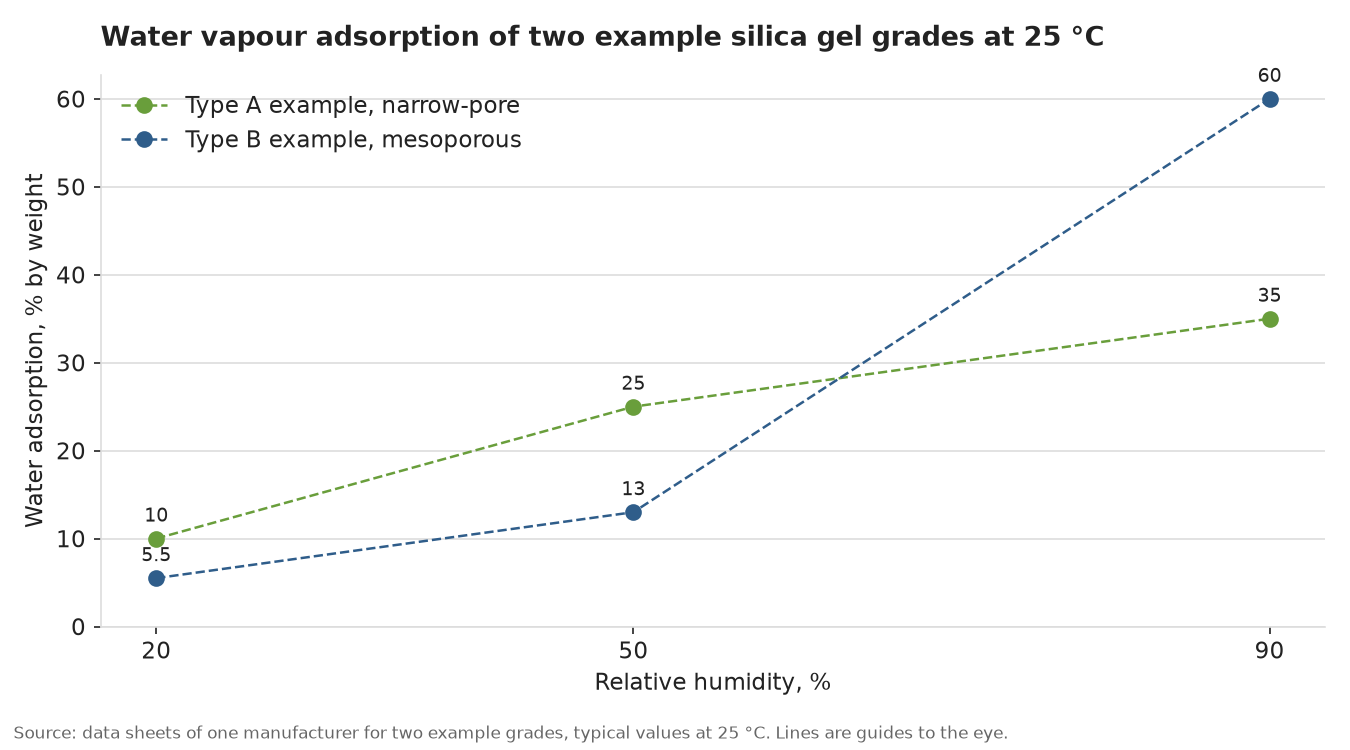
For these two example grades, type A adsorbs about twice as much water vapour as type B at 20% and 50% RH. At 90% RH, the values are 35% by weight for type A and 60% for type B. These are typical data-sheet values at 25 °C from one manufacturer. Lines connect the listed values as a guide to the eye; they are not measured isotherm curves or dryer performance data.
Data for selected grades
Orange type A silica gel, 2-5 mm: typical equilibrium water adsorption is 10% by weight at 20% RH, 25% at 50% RH and 35% at 90% RH, all at 25 °C. Its average pore diameter is about 2-3 nm.
Wide-pore granules, 5-8 mm: the TDS gives a minimum water adsorption of 80% at 100% RH and an average pore diameter of 8-11 nm. The adsorption test temperature is not stated in this TDS, so this value is not directly comparable with the values at 25 °C.
Original BASF Sorbead® Air R and Air WS: their data sheets give typical equilibrium water capacities of 42% by weight at 80% RH and 25 °C for both products. At 10% RH and 25 °C, the values are 6.5% for Air R and 4% for Air WS. These figures describe the named BASF products. Use the TDS of the selected equivalent grade for comparison.
RH means relative humidity. Equilibrium capacity is not the working capacity of a dryer bed and does not determine the bed quantity on its own.
Storage: store silica gel in tightly closed packaging in a dry room to prevent moisture uptake before use. Reseal opened packaging carefully.
Documents: TDS and SDS are available on request for the selected grade. The SDS gives handling information.